|
|
Posted By By Jeffrey E. Phillips, Executive Director,
Thursday, November 4, 2021
Updated: Wednesday, November 3, 2021
|
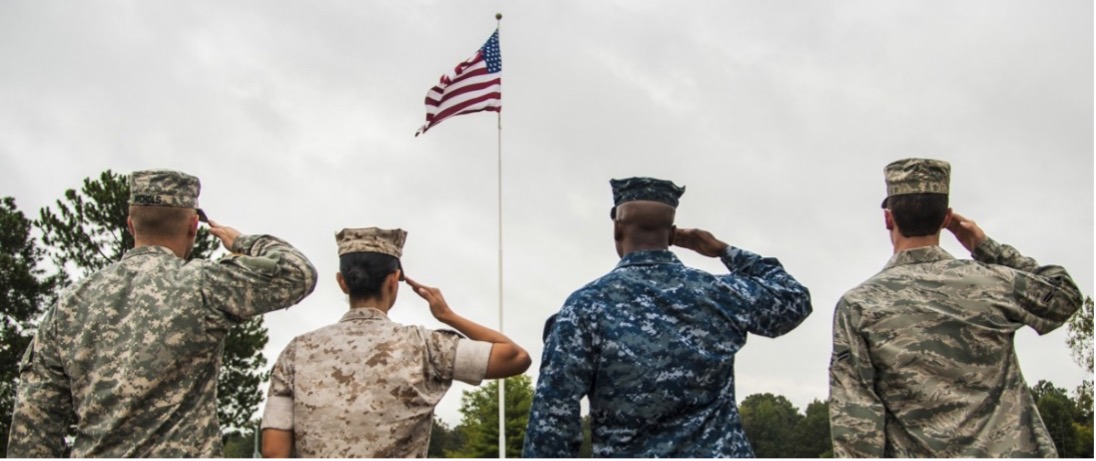
War, pestilence and natural disaster — the past two decades have brought into terrifying focus the massive resources needed to adequately respond to crises, especially when any of them occur in parallel. Relying as we have on uniformed military resources likely will prove inadequate in the future. A solution can be found among America’s 18 million veterans.
The U.S. has emerged from a two-decade conflict in Afghanistan that, in simpler times, might be called a “guerilla war.” It was not a “big” war, yet at its height a decade ago, it badly strained the nation’s land forces. Units deployed, returned home for the minimal interval, and then redeployed. Families were strained and some broke. Patriotic employers of employees in the Reserve and National Guard in some cases chafed and jobs were endangered.
Generals nervously considered the implications should something else, perhaps something bigger, arise. The Pentagon spent hundreds of millions of dollars (and still is doing so) to attract and retain young men and women. Meeting recruiting goals frequently has proved impossible in a country where less than a third of military-age youths are qualified for military service — and among that fraction, just 15 percent are interested in doing so.
Will parents, clergy, educators and peers encourage young Americans to serve under leaders whose ability to win a war they could arguably question?
History tells us in stark terms that disasters occur usually when preparation is not optimal. History tells us that big wars happen. We are not immune from history. While becoming too tolerant of lesser war, we have fooled ourselves into thinking a “big one” is impossible. But war is a product of human nature, and human nature does not change.
On Aug. 1, 1990, the theme was the superfluity of big armies: the Soviets were gone and tank battles a thing of the past. On Aug. 2, Iraq invaded Kuwait. Less than seven months later, as a captain in a U.S. armored division, I coursed into Iraq amid a sea of tanks that stretched to the horizon in every direction. Tank battles were fought; fortunately, our enemy used their Soviet-built machines — many of which survived weeks of aerial bombardment — with neither skill nor determination. It could have been very different.
So, here is the creep to war in the Pacific. No, it may not happen, or it may be muted by a sharp clash and then a drawing back of parties. There is a resurgent Russia intent on reclaiming its former glory and territory. And in between, the “smoking” trouble spots that could ignite — or be ignited by — the big ones.
Add the effects of climate change, natural disaster and population dislocations among millions, the specter of other pandemics, civil disorder among a populace increasingly polarized. In the U.S., of necessity, the go-to has been the military, from troops deployed overseas in small but exhaustive wars, to military nurses staffing civilian hospitals, to the National Guard saving lives in the states and on guard in Washington. These massive resource demands, with near simultaneity, have left us in some cases exhausted.
This is not a call, however, for more military spending. The U.S. military is already too expensive for what we’re getting. Absent a global war, the spending necessary to appreciably expand the force is unaffordable. Yes, we can grow key capabilities selectively — and should, while reforming acquisition.
Recently at the Army and Navy Club in Washington, a friend — an Army Ranger with too many combat tours and a faithful service black Labrador — suggested what we, over lunch, dubbed a “Veterans Ready Reserve.”
A Veterans Ready Reserve would constitute a reservoir of veterans who volunteer to be called on in time of national need. These volunteers could be used depending on the need and their abilities. For those less fit than in youth, one could envision non-physically demanding “admin” jobs.
Already, a praiseworthy bipartisan bill in Congress, H.R. 4343, sponsored by Reps. Brad Wenstrup (R-Ohio) and Jimmy Panetta (D-Calif.), both veterans, would enable the Department of Defense (DOD) to place some military retirees with special skills that address a critical shortage into the Ready Reserve.
Our idea of a Veterans Ready Reserve goes further. Such a “reserve” constitutes capability. Even if a million veterans “registered” and only 10,000 were used, that is 10,000 fewer personnel demands. The reserve could be activated by the president and managed by the Pentagon. Beyond that, until activation, little taxpayer expense would be necessary.
Such a “reserve” also offers intangible benefits. These volunteers, who have declared their willingness to again serve their nation, would derive pride and a sense of re-engagement. One can even envision a lapel pin, etc. One can also envision fitness and health improving on the part of some volunteers, who decide they must be ready if called.
Volunteering would not entail benefits, although actual service might. Volunteers would agree that they may never be called upon, or that if the reserve were called upon, they may not be selected for service, based on need and capability. Further, volunteering for this service would not affect any existing veterans or retiree benefits. (Only actual service might affect those benefits.)
We can be certain that America will face crises that create historic demands. Engaging willing veterans in readiness for the call to service is one way to increase capacity and tap into a patriotic spirit that runs deep — for the benefit of us all.
This post has not been tagged.
Permalink
| Comments (0)
|
|
|
Posted By ROA Staff,
Wednesday, November 3, 2021
|

The Reserve Organization of America has filed an amicus brief to
the U.S. Court of Appeals supporting a National Guardsman denied
differential pay.
WASHINGTON, DC, UNITED STATES OF AMERICA, November 3, 2021 - The congressionally chartered Reserve Organization
of America in collaboration with Wiley Rein LLP has filed an amicus brief to
the United States Court of Appeals for the Federal Circuit supporting a
National Guardsman denied differential pay
by the federal government for
the period of his activation in support of contingency operations.
To maintain a ready and strong national defense after World War II, Congress passed reemployment protections to boost the recruitment
and retention of non-career servicemembers in the National Guard and Reserves. These reemployment rights expanded, culminating in the
1994 Uniform Services Employment and Reemployment Rights Act (USERRA), which protects Reserve and Guard servicemembers
against adverse employment actions.
One protection is the differential pay statute, which entitles reservists
mobilized to active duty from the federal civilian workforce to increased
compensation to close the gap between the servicemember’s military and
civilian compensation. This differential pay is available throughout the
entire period the servicemember is entitled to re-employment rights under
USERRA. Employers from aerospace to grocery chains and several state
governments elect to cover pay differences for their employees who are
activated to serve in their military jobs.
The amicus brief filed by ROA supports a rehearing of Bryan Adams v.
Department of Homeland Security. Adams, an Air National Guardsman
and an employee of the Department of Homeland Security Customs and
Border Protection, was activated and performed three periods of National
Guard military service.
Adams applied for differential pay and was denied, as his activation was on “non-contingency” orders, making him, according to DHS,
ineligible to receive differential pay. His appeals were denied with the explanation that the work he was doing was “in support” of a
contingency operation, not directly working in a contingency operation. ROA maintains that there should be no difference between
supporting and “participating” in contingency operations; both roles are integral to mission success.
Since 9/11, more than one million members of the Reserve and National Guard have been activated to fight the war on terror. The training
and service of these citizen-warriors is indistinguishable from those service members in the active component.
“ROA is proud to file this amicus brief, defending the employment rights of Mr. Adams, earned with faithful service to the nation,” said
retired Maj. Gen. Jeffrey Phillips, ROA executive director. “Answering the call should not result in financial penalty. Our Reserve and
National Guard have stood shoulder-to-shoulder with the active force throughout this fight for freedom. We are acting to support this patriot
and to create a precedent that stops future abuses dead in their tracks.”
About ROA
ROA, founded in 1922, is America’s only exclusive advocate for the Reserve and National Guard – all ranks, all services. With a focus on
Reserve and National Guard readiness, ROA supports the men and women of America’s Reserve Components, their families, and
veterans of the Reserve force. Download the entire release here.
This post has not been tagged.
Permalink
| Comments (0)
|
|
|
Posted By Reserve Organization of America,
Wednesday, November 3, 2021
|

How Will Capitol Hill Celebrate Veterans Day?
CONTACT: Lizzie Landau, 202-228-0315
WASHINGTON, D.C. — Today, ROA announced that its executive director, Maj. Gen. Jeffrey Phillips, U.S. Army (Ret.), will join U.S. Senator Kirsten Gillibrand, author of the Presumptive Benefits for War Fighters Exposed to Burn Pits and Other Toxins Act, comedian and advocate Jon Stewart, John Feal of the FealGood Foundation, and leading veterans and military service organizations for Capitol Hill meetings and to call on Congress to finally pass legislation to establish a presumptive service connection for veterans suffering from illnesses caused by military toxic exposures.
What: Capitol Hill Press Conference to Call for Passage of Military Toxic Exposures Legislation
Who: Jon Stewart, John Feal of the FealGood Foundation, and representatives of Burn Pits 360, Reserve Organization of America, Disabled American Veterans, Iraq and Afghanistan Veterans of America, Veterans of Foreign Wars, and Wounded Warrior Project.
When: November 4, 2021 at 12:30 p.m.
Where: Russell Senate Office Building; Outside of the Kennedy Caucus Room (SR-325)
This post has not been tagged.
Permalink
| Comments (0)
|
|
|
Posted By Jonathan Sih, Director of Legislation,
Wednesday, November 3, 2021
|
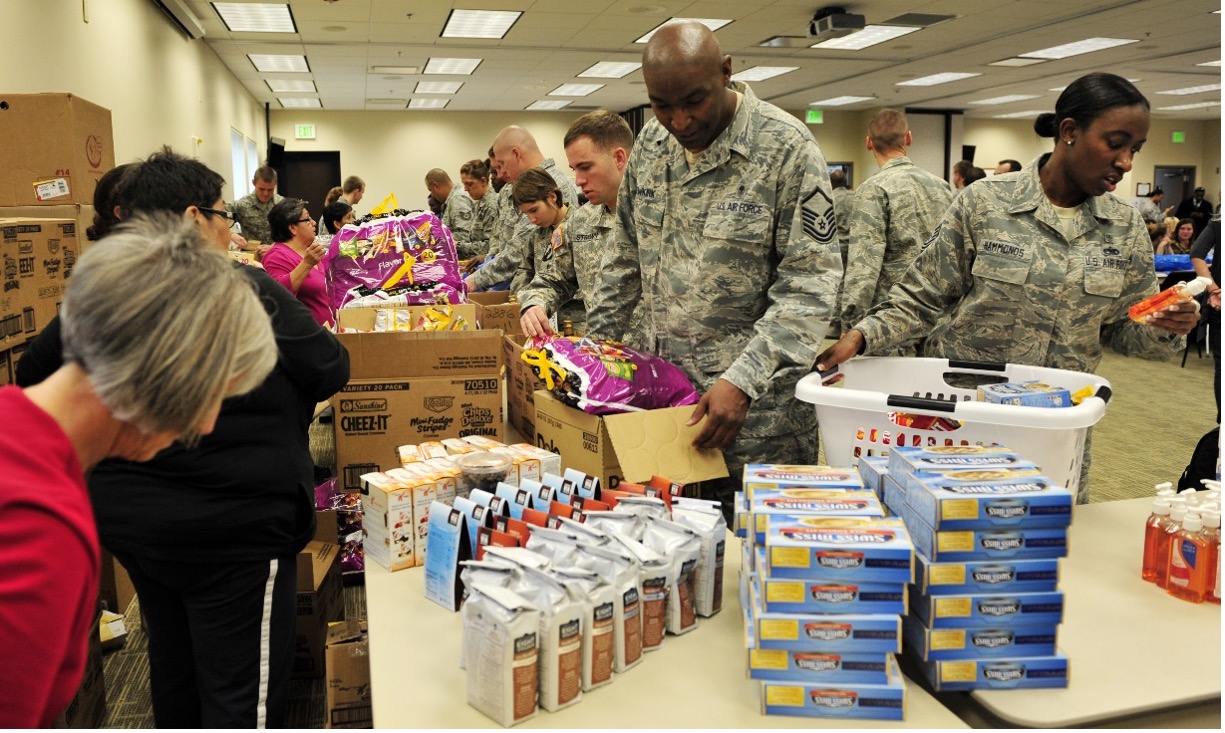
Earlier this spring, U.S. Census Bureau data revealed that approximately one in five National Guard and Reserve service members reported that they are food insecure; responding that they were “sometimes” or “often” hungry, which is more than double the national rate. Over the summer, Senators Tammy Duckworth (D-IL) and Elizabeth Warren (D-MA) sent a letter to Secretary of Defense Lloyd Austin requesting information regarding the scope of hunger among service members. In a separate line of effort, language was included in the Defense Appropriations Bill (H.R. 4432) reinforcing a FY 2020 National Defense Authorization Act provision requiring the Secretary of Defense to provide an assessment of the current extend of food insecurity among servicemembers and their dependents.
Senator Duckworth and Warren’s letter can be read here.
This post has not been tagged.
Permalink
| Comments (0)
|
|
|
Posted By Jonathan Sih, Director of Legislation,
Wednesday, November 3, 2021
|
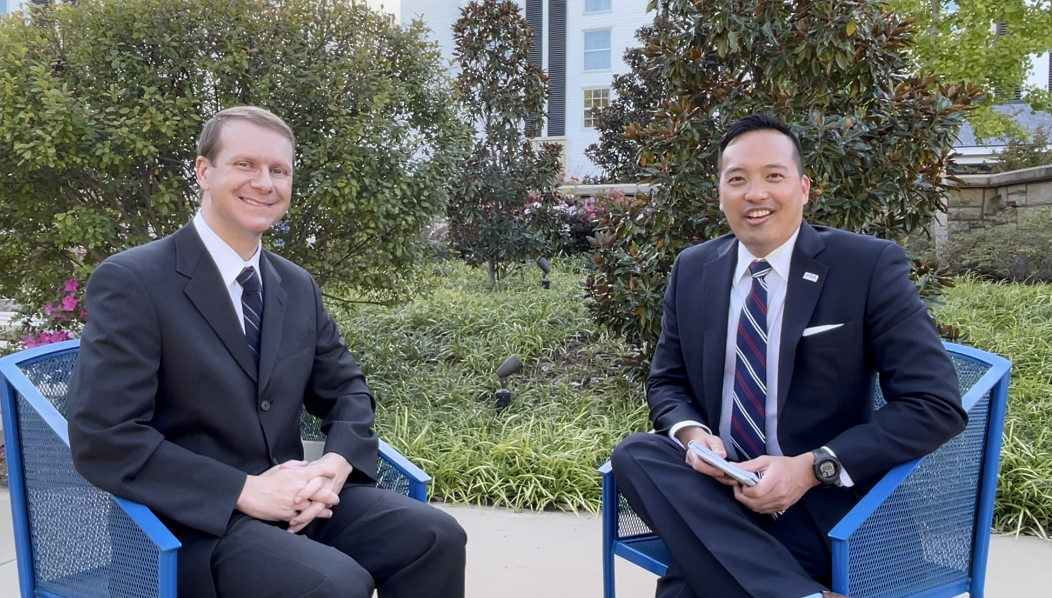
The Department of Veterans Affairs National Cemetery Administration (NCA) Outreach Officer, Larry Provost spoke at ROA’s National Convention in Memphis and briefed the General Assembly on the variety of services the NCA offers to veterans such as “Pre-Need” application where veterans can confirm their eligibility and have their service information uploaded in the VA NCA system. Mr. Provost also briefed that to be interred in an VA cemetery, the servicemember has to have served any period of active duty other than for training, and that in addition to the DD214, other forms may be accepted to verify this such as an NGB22, NGB23, separation orders, and retirement orders.
The recap interview with Mr. Provost can be found here.
This post has not been tagged.
Permalink
| Comments (0)
|
|
|
Posted By By David Vergun,
Wednesday, November 3, 2021
|
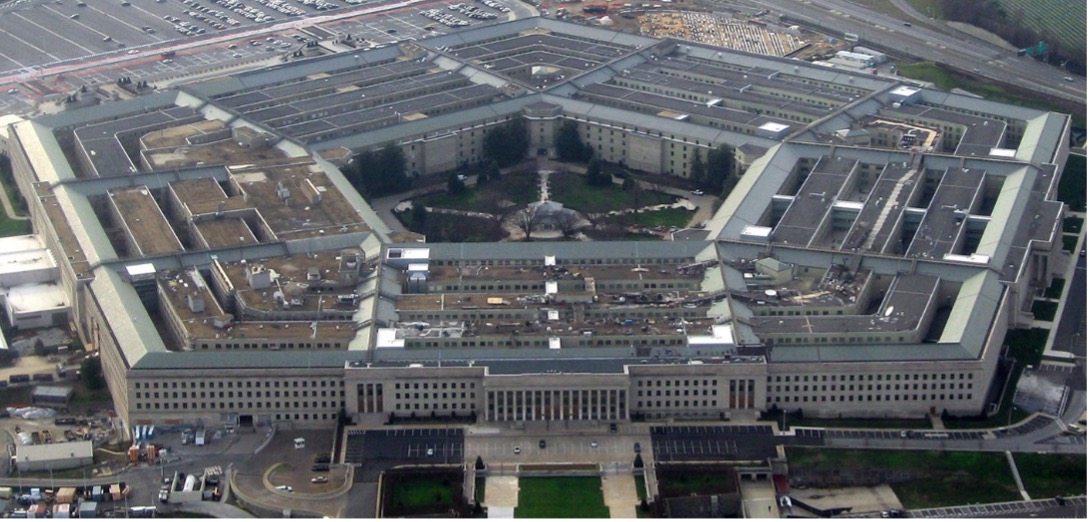
The Defense Counterintelligence and Security Agency has successfully enrolled all Defense Department service members, civilians and contractors with a security clearance into its current continuous vetting program.
Continuous vetting will eventually replace periodic reinvestigations, which are conducted every 10 years for employees with a secret clearance and five years for those with a top secret clearance. It will also include DOD personnel who do not have a clearance, according to Heather Green, assistant director of vetting risk operations for DCSA.
This brings the agency and the federal government one step closer to its trusted workforce, or TW 2.0, goal of providing continuous vetting for all of DOD, as well as other government personnel outside of the department, she said. TW 2.0 is expected to be incrementally implemented over the next few years.
Full statement from the Department of Defense can be read here.
This post has not been tagged.
Permalink
| Comments (0)
|
|
|
Posted By C. TODD LOPEZ, DOD NEWS |SEPT. 24, 2021 ,
Tuesday, October 5, 2021
Updated: Monday, October 4, 2021
|

The Defense Department is asking as many as
a half-million ID card holders to go online now
and make appointments to renew their IDs —
many of which are past the expiration dates
printed on them.
DOD extended the expiration dates
electronically to account for the challenges of
renewing them in an COVID-19 environment.
Last year when it became apparent that
COVID-19 was going to dramatically affect the ability of individuals to congregate or wait in line
at ID card offices, the Defense Department electronically extended the expiration dates for
many ID cards for several months to allow cardholders a greater amount of time to get those
cards renewed.
The extensions primarily benefited the dependents of active-duty service members, Reserve
and National Guard service members and their dependents, as well as retirees and their
dependents.
Currently, there's a backlog of more than a half-million people who have ID cards that are past
the expiration dates printed on them, and it's time to go online and schedule an appointment
to get those cards renewed, said Stephen Wellock with the Defense Manpower Data Center.
Right now, the previously extended ID cards for dependents of active duty service members, as
well as Reserve and National Guard service members and their dependents, can be used until
Oct. 31, 2021. The cards of retirees and their dependents can be used until Jan. 31, 2022.
But Wellock also said some might not have the time they think they have.
For those service members and their dependents and retirees and their dependents whose ID
cards expired after July 31, 2021 — there is no extension.
"You have no extension, your ID card is expired," he said. "You need to get it replaced, for both
active duty, Guard and Reserve dependents, and for retirees. So, if a service member’s
dependent is out there, and their ID card expired on Sept. 7, they don't have until October to
get it replaced; their ID card has expired, and they need to make an appointment as soon as
possible."
While some family members may have an expired ID card, Wellock said that just because an ID
card expires doesn't mean health benefits expire. Those benefits are managed by a different
system, he said.
"Their health care is managed by the fact that they're enrolled in DEERS, in the Defense
Enrollment Eligibility Reporting System. That's what determines their eligibility for health care.
So if somebody's ID card expires on Aug. 7, they don't automatically lose their health care
because their card is expired."
An additional change is that while currently cards were previously issued to dependents as
young as 10 years old, going forward, cards will only be issued to those dependents who are 14
or older.
Wellock said the department is not planning any further extensions on the renewal of expired
ID cards. He said cardholders should begin scheduling appointments now to get their cards
renewed Appointments can be made online to renew ID cards, he said, and cardholders don't
need to limit their appointment to the card office they typically visit — there are many
locations that can handle renewals, and many provide a "walk-in" service capability. The DOD
ID card facilities are managed and operated by the local installations, so if service members are
having difficulty making appointments, they should inform their chain of command.
For more information, click here.
This post has not been tagged.
Permalink
| Comments (0)
|
|
|
Posted By By Mass Communication Specialist 1st Class Brian Caracci, Navy Region Southwest Reserve Component Co,
Monday, October 4, 2021
Updated: Monday, October 4, 2021
|

Chief of Navy Reserve Vice Adm. John Mustin, Commander, Navy Reserve Force and Rear Adm. John
Schommer pose for a group photo with employer’s, aboard USS Midway Museum during a Navy
Employer Recognition Event (NERE) in San Diego, August 20, 2021. Selected employers were nominated
by their Navy Reserve employees for supporting their service and especially mobilization for the nation’s
response to the COVID-19 pandemic, and invited to attend the one-day event that includes a tour of
Midway, a static display of aircraft at Fleet Logistics Support Squadron (VR) 57, an equipment display by
Maritime Expeditionary Security Squadron 1 and SEAL Team 17. The Navy Reserve mobilized 2,875
service members in 2020 under the presidential authorization for DoD’s support to the nation’s
pandemic. (U.S. Navy photo by Mass Communication Specialist 1st Class Brian P. Caracci) SAN DIEGO – Chief of Navy Reserve Vice Adm. John Mustin recognized select civilian employers from across the nation for their exceptional support of America's Navy Reserve Sailors, including their support of Reserve Sailor mobilization for COVID-19 pandemic national relief efforts, during a Navy Employer Recognition Event (NERE) August 20. The day commenced aboard USS Midway Museum where Mustin addressed representatives from 25 Reserve Sailor employer organizations and presented each employer with a certificate of appreciation, broadcast live to social media. "This is our 10th Navy Employer Recognition Event, a program we began in 2010 as our way of thanking and recognizing employers who enthusiastically support their employees’ service in the Navy Reserve,” said Mustin. “I think you will enjoy the schedule of events that we’ve put together for you today. Our goal is for you to see first-hand a sampling of your employees’ capabilities and the different types of service they contribute to our nation and our national defense.” During the recognition event, employers spoke with Navy Reserve unit aviators and aircrew and experienced an up-close look at Navy aircraft assembled at Fleet Logistics Support Squadron (VR) 57 at Naval Air Station North Island, California. Participants also visited Silver Strand Training Complex where they had the opportunity to speak with expeditionary and special warfare Navy Reserve Sailors during a small-boat display provided by Maritime Expeditionary Security Squadron (MSRON) 1 and static displays of weapons and equipment provided by SEAL Team 17. Ricky Freeman, president of Honeywell Defense and Space Corporation, underscored the importance of civilian employers' support of their employees who are in the National Guard and Military Reserve Forces. “I’m a former warfighter myself, and as a leader in the civilian sector, I think it’s very important that we support our men and women in uniform,” said Freeman. “I’m very much dedicated to doing that. In my mind, I would like to see more employers come to these events because they have to understand that what these men and women do is dangerous, but it is absolutely essential for our national security.” U.S. Navy Lt. Sarah Freeman, a Selected Reserve Sailor who works for UNC REX Healthcare, spoke about how the event helped attendees gain a better appreciation of the nature and importance of tasks that Reserve Sailors perform at training events and mobilizations. “My employer has been very supportive of my Reserve time,” said Freeman. “However, having them able to see what the military does and how important the mission is, is critical.” The Navy Reserve mobilized 2,875 service members during 2020 under presidential authorization for support to the Department of Defense’s pandemic response. Mustin iterated the impact of this to employers of Navy Reservists and emphasized the importance of their support. “COVID-19 put more than usual strain on employers and Reserve Component members with short-notice mobilizations to medical facilities and then our public shipyards,” said Mustin. “That is why I am so happy to be here with you today and why we decided that this year’s NERE nominations and events would celebrate those companies who supported our response to COVID. Thank you for your continued support of your employees.” NERE 2021 culminated with dinner and a reception at the Admiral Kidd Catering and Conference Center at Naval Base Point Loma, Harbor Drive Annex, sponsored by the Employer Support of the Guard and Reserve (ESGR) organization, a DoD program that develops and promotes supportive work environments for service members in the Reserve Components through outreach, recognition, and educational opportunities. 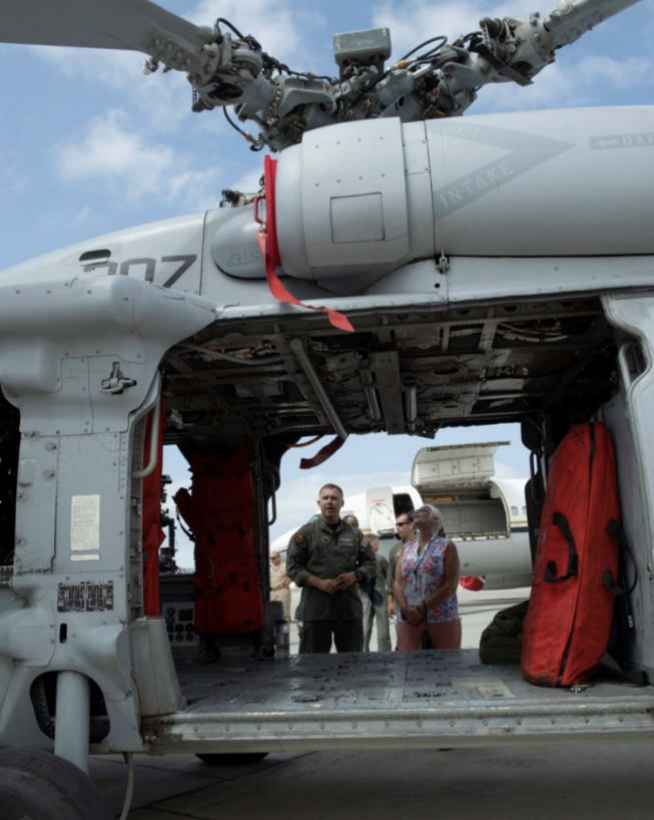
CORONADO, Calif. (Aug. 20, 2021) Lt. Cmdr. Sam
Dirickson, assigned to Maritime Support Wing,
explains equipment of an MH-60 Seahawk to
employers during the Navy Employers Recognition
Event (NERE) at Naval Air Station North Island, August
20, 2021.Selected employers were nominated by their
Navy Reserve employees for supporting their service,
especially mobilizations supporting the nation’s
response to the COVID-19 pandemic. The employers
were invited to attend the one-day event that included
a tour of Midway, a static display of aircraft at Fleet
Logistics Support Squadron (VR) 57, an equipment
display by Maritime Expeditionary Security Squadron 1
and SEAL Team 17. The Navy Reserve mobilized 2, 875
servicemembers in 2020 under the presidential
authorization for DoD’s support to the nation’s
pandemic. (U.S. Navy photo by Mass Communication
Specialist 1st Class Chelsea Milburn) 
CORONADO, Calif. (Aug. 20, 2021). Eric M. Hofmeister, Deputy Commissioner of the Suffolk County
(New York) Department of Public Works, views the cockpit of an F-5N from VFC-13 during the Navy
Employers Recognition Event (NERE) at Naval Air Station North Island, August 20, 2021. Selected
employers were nominated by their Navy Reserve employees for supporting their service, especially
mobilizations supporting the nation’s response to the COVID-19 pandemic. The employers were invited
to attend the one-day event that included a tour of Midway, a static display of aircraft at Fleet
Logistics Support Squadron (VR) 57, an equipment display by Maritime Expeditionary Security
Squadron 1. The Navy Reserve mobilized 2, 875 servicemembers in 2020 under the presidential
authorization for DoD’s support to the nation’s pandemic. (U.S. Navy photo by Mass Communication
Specialist 1st Class Chelsea Milburn)
This post has not been tagged.
Permalink
| Comments (0)
|
|
|
Posted By ROA Staff,
Monday, October 4, 2021
Updated: Monday, October 4, 2021
|

The $100,000 renovation of warn, stained and
damaged components of ROA’s Capitol Hill
headquarters building, dedicated on
Washington’s birthday 1968, is halfway done.
In this before-and-after photo set, stains in
the “before” (left) are disappearing in the
“after.” The cleansing involves a citric acid
solution that reaches into the limestone,
“flushes” contaminants to the surface, and is
then washed away by rain, yielding results
over time (you can see how it has already
started). By ROA’s October 2022 centennial
convention, the decades of grime will be
erased.
In the photo to the left, CSCI general manager,
Jim Donaghy does handwork on masonry
repairs – that’s right, ROA’s work is being
done by the renovation company manager
and its president, Tim McLaughlin! CSCI is the
Architect of the Capitol’s official contractor for
renovation work on congressional buildings.
Work has also cleaned all windows; removed
rust from handrails, with them painted to look
new; repaired portico ceiling cracks with the
ceiling repainted, repaired and cleaned
exterior “Art Deco” light fixtures (see photo), and cleaned and repaired all exterior “bluestone”
surfaces where needed.
During CSCI’s initial assessment of the work, ROA learned, to no surprise, that our building is made
to standards and with materials essentially no longer seen. And it will bear gleaming testimony to
ROA’s enduring value to America for many decades to come! 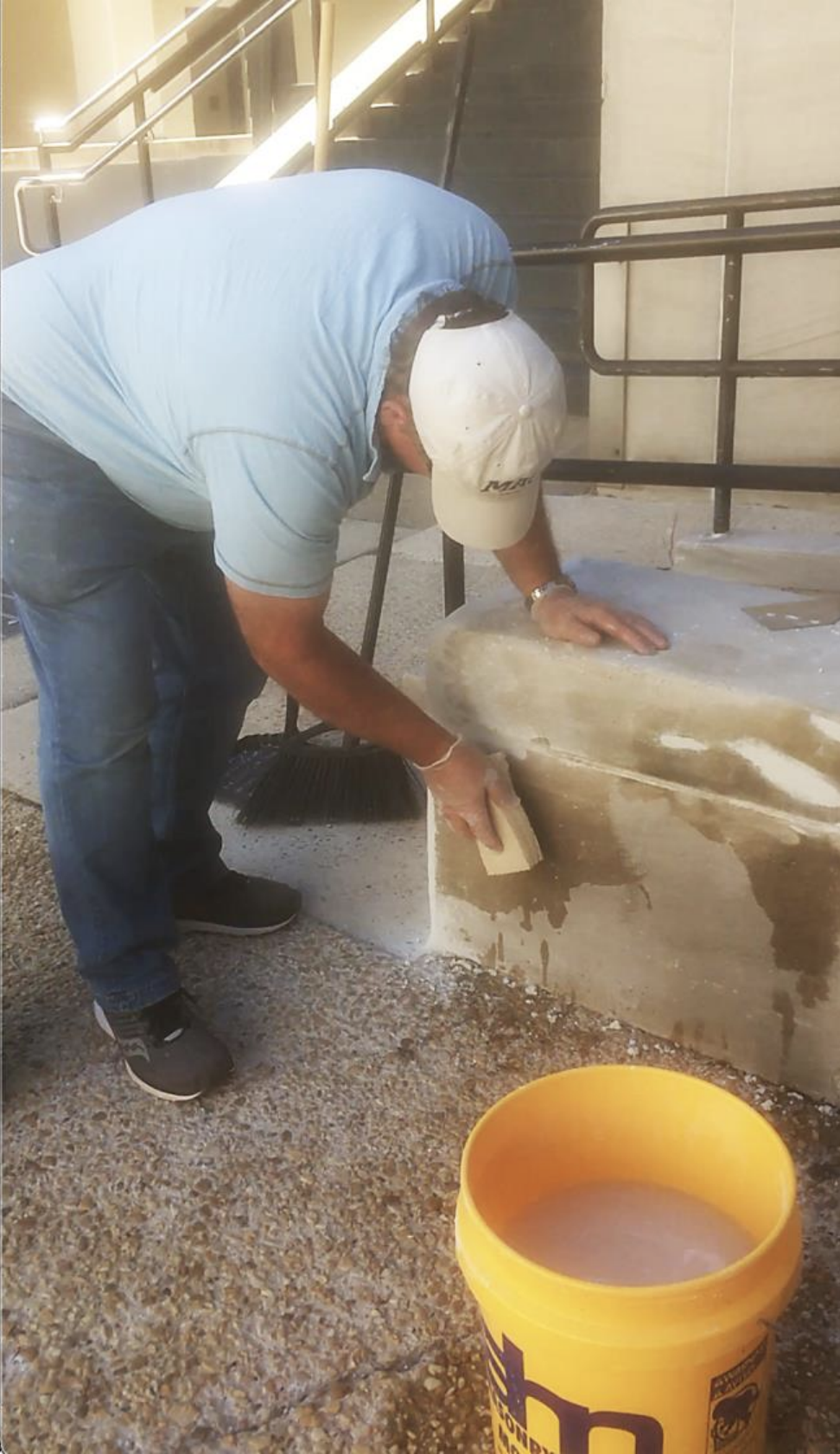

This post has not been tagged.
Permalink
| Comments (0)
|
|
|
Posted By Administration,
Friday, October 1, 2021
Updated: Saturday, October 2, 2021
|

On this Texas billboard, ROA is cited in support of medically retired Army Reserve Capt. Le Roy Torres, fired from the Texas Department of Public Safety, where he was a state trooper, after returning home from Iraq, his lungs crippled by toxic “burn pit” fumes. ROA wrote Texas Governor Greg Abbott in November 2019, asking that he simply intervene so that Capt. Torres could continue serving the people of Texas in a less physically demanding capacity and retain his dignity. Abbott refused and his cooperative state supreme court refused to hear the case. Now, because a governor refused to support a war veteran, the U.S. Supreme Court is considering whether to consider the case, in other words, whether or not to hear it: on behalf of Torres, attorney Brian Lawler filed a petition for certiorari (discretionary review), and ROA filed an amicus brief urging the court to grant certiorari. ROA supports Captain Torres and his wife, Rosie, co-founder and executive director of Burn Pits 360 veteran service organization: www.burnpits360.org. This outrage, which has upended their lives, is all too common among veterans sickened by the toxicity of modern war and cast aside by those they fought for. ROA is the only national military organization that solely and exclusively supports the Reserves and National Guard, all ranks, all services. We’re honored to help out in the fight to reduce battlefield toxicity and support those afflicted by it.
Tags:
burn pit
disability
Permalink
| Comments (0)
|
|
 Blog Home
 All Blogs

 RSS
RSS