|
|
Posted By By C. Todd Lopez, DoD News,
Saturday, September 11, 2021
|
The 9/11 attacks made most Americans who are old enough to remember both confused and angry about what had happened. The attacks weren't just on people or buildings, but on the nation's guiding ideals of freedom, liberty and the pursuit of happiness.
Early that morning, two aircraft hit the tallest towers of the World Trade Center complex in New York City. At 9:37 a.m., another plane hit the Pentagon in Washington, D.C., killing 184 innocent individuals both onboard the plane and in the building.
Less than 30 minutes later, another plane crashed in Shanksville, Pennsylvania.
Deputy Defense Secretary Kathleen H. Hicks was working at the Pentagon that day, and her son was enrolled in the child care center there, as well. She said she and her son were lucky to get home that night, adding that it took hours to make the trip.
But the following day, she said, she knew America was back on its feet.
"On 9/11, the next day, and in the months and years that followed ... we saw this Pentagon community respond to that attack with incredible resiliency," she said during a memorial event in the Pentagon courtyard today. "We saw resiliency through acts
of selflessness: Pentagon employees and first responders on that day who worked to rescue survivors and fight through an inferno. Incredibly, they rushed into danger, just as they did in New York, into the suffocating black smoke and unbearable intense
heat."
Even after the attack on the Pentagon, Hicks said, the building never closed."That night, Secretary Rumsfeld held a press conference to let the American people know that the Pentagon would continue to operate," she said. "There was the resiliency through
duty. That next day, like many other employees, I headed back into this building. The Pentagon, in fact, has never closed its doors fully since the completion of its construction.
"While planners in the Pentagon worked out America's response, construction crews worked endlessly to put the building back together," Hicks said.
"The team's goal in [the Phoenix Project] was to rebuild the damaged sections of the building and have it ready to be staffed within one year," she said. "They put a large digital clock up, and it displayed to the construction team the remaining days,
hours and minutes until September 11, 2002. "Hicks said crews worked tirelessly to complete that task — some putting in 20-hour days. That effort, she said, didn't just result in them meeting their goal — it resulted in them beating it.
"Incredibly, that work of the Phoenix Project was finished in August of 2002, more than three weeks early," she said. "And as we are here commemorating the 20 years since the attacks, this is a fitting moment, I think, to rededicate ourselves to that
resilient spirit, one that seeks to act selflessly, uphold our duty, and is dedicated to perseverance.
"The planning of America's response to 9/11 began almost immediately. Following the attacks, said Air Force Gen. John Hyten, vice chairman of the Joint Chiefs of Staff, the deaths of Americans in New York City, the Pentagon and Shanksville united
the nation in an effort to rebuild and defeat those who had both perpetrated the attack and those who harbored them."
All these people inspired a generation who responded to the call of our nation, as one, to fight and defend our way of life," Hyten said. "[It's] a generation that has fought tirelessly to defeat terrorists and terrorism in Afghanistan and around
the world. And for more than 20 years, we successfully prevented another major attack on our homeland. Never before in our history has America asked so much over such a long, sustained period of time of an all-volunteer force. We kept our nation
safe.
"The U.S. ceased operations in Afghanistan at the end of last month, and those who fought in Afghanistan have strong feelings about what happened there, Hyten said. But one emotion they should all have, he said, is pride.
"We feel every emotion that you can imagine: anger, frustration, confusion," he said. "But we also feel pride — pride for doing the job our nation called us to do; pride in doing it right and doing it well; pride in doing it as one nation."
The job of American servicemen and women is not done now — nor will it ever be, he said. Every American who puts on a military uniform has committed to a job that continues for as long as they are in the service.
"We must continue our hard work to protect the lives of all Americans, our country, the values we cherish," he said. "We must stay ready and resilient. So, I thank you for your commitment to our country; I thank you to everyone who serves, and
I'm proud of everything that you do to defend this nation, our citizens, and our way of life." Read the Original Article on Defense.gov
This post has not been tagged.
Permalink
| Comments (0)
|
|
|
Posted By ROA Staff,
Wednesday, August 18, 2021
|
ROA members: By now, you have read much of the messaging that has resulted from the capitulation in Kabul. The tragic outcome occurred not for want of skill, effort, heart, guts, blood, sweat, sacrifice, and tenacity on the part of America’s Reserve Components.
At home or abroad, you know what you did. You know what your buddies to the left and right of you did. Of that you must be proud. You must, we respectfully suggest, be thankful that the opportunity was ours to seize – to be of service to others. And that you seized that opportunity. ROA will not try to tell you how to assess the strategic impact of our service in the war. History will have its say, and history takes its own time. We do know that we brought to oppressed peoples the light of freedom. We kept enemies of our nation at bay. We showed our fellow countrymen and women our mettle and our worth.
As ROA’s executive director and a retired soldier, my recommendation to you, fellow comrades, is to get ready for the next mission. It will come. For many of us who served in the pandemic response, that new mission has already come. Or fighting wildfires. Or floods. Our job is to go where we are sent. Among those of us in the Reserve and National Guard, we have been going to the sound of the guns, literally or figuratively, since before our nation’s birth. We will continue to do so.
And may our fellow Americans thank God for that.
Jeffrey E. Phillips
Executive Director
Reserve Organization of America
Tags:
continues
Mission
Permalink
| Comments (0)
|
|
|
Posted By CH (COL) Sherman R. Reed, USA, (Ret.),
Monday, August 9, 2021
|

Greetings Fellow ROA Members, I have just celebrated two events in my life. One was my birthday and the other was my 50th anniversary in ministry. I am just amazed at how quickly time has vanished. That is one commodity God has for us that we cannot add to nor take away-only use it wisely. Time is beyond our capacity to change-only spend carefully. Reflecting my race-track journey, I was reminded of three companions in ministry which I have always had readily available to me. Those three special ministry instruments are my Bible, my prayer book, and my hymn book. I readily admit that I cannot sing but I can admire and allow the lyrics and music of gifted persons to inspire and lift me beyond my level or standing. In 1963 traveling to my first assignment in the United States Air Force, I placed my favorite Bible in the passenger seat of my car. I was headed to Interceptor Weapons Controller School at Keesler AFB, Biloxi, Mississippi. That was the beginning of something I would be doing the remainder of my life and duty. Now, there is something about military people and objects of spiritual reminders. I do not feel military persons are superstitious when it comes to these symbols. Military persons are trained to face death as well as life, and to appreciate both. Through these fifty plus years, I cannot tell how many Crosses, Stars of David, Rosaries, various symbols reminders of God and spiritual faith, and bibles have passed through my hands. My Bible in that front seat (and later in my suitcase or briefcase when I flew), became a reminder about God in ways too numerous to mention here. I can say also that when I looked at it or picked it up, I knew what section I was the previous time I opened it. My Bible reveals a path showing me I must live for the long run. “To do so I must abstain from the harmful in order to enjoy the good. Sacrifice good in order to have better; restrain impulse in order to achieve control” (Bertha Monro). I filled it with notes, color markings, certain symbols which carried personal meaning. Just as my Bible contains certain promises and words of comfort, the hymn book had within the covers hymns and creeds that have become familiar to me. Often, I would find myself singing to myself and talking to God about the words of a particular hymn. In my barracks or motel room I would open it for someone else had expressed their feelings about God far better than I could then. After these fifty years, when I now read or listen to a hymn, it is very special to me for there is a personal story I can relate to when that hymn was so important, comforting and uplifting. My hymn book reminds me I can keep a song in my heart whatever my circumstances. Fast forward to the year of entering the Chaplaincy and civilian ministry, at my Ordination, I was presented a very special gift. It was the 1928 edition of the Book of Common Prayer. It also became my traveling companion making my total “special partners” to my spiritual growth to three. My journey has been directly affected in such positive ways far more than I could have dreamed. It is not because of something magical but rather Godly and spiritual bound in these three very special “companions.” I would not proclaim them as equals but I would consider them three containers of Treasures of Truth. From my perspective, my journey was blessed from mining for nuggets within these three tools. I gained a better understand God and His love and guidance for me on a daily basis. They became far more than reminders of Him but became containers of divine inspiration and expressions from others on the same journey, further teaching me the promises and companionship of God buried in the Holy Bible. After these many years of service to God and Country, I can recall time and time again when I went to all three for aid and comfort helping me share with others (as well as my personal life) how the three relate to every problem, opportunity, loss and gain a person experiences in a lifetime. Music and prayer are two components of every major religion I can think of impacting behavior and Godly reverence. Using these tools to read, study, memorize, share with others weep over, and rejoice in spiritual and emotional expression, I have not only learned the way of spiritual victory but knowing when to speak and when to remain silent, how to deal with misunderstandings, intercede for others and achieve life lessons. “There is in man a higher than love of happiness; he can do without happiness, and instead thereof find blessedness!” (Carlyle). “He has set eternity in the human heart, yet no one can fathom what God has done from beginning to end” (Ecclesiastes 13:11, NIV).
This post has not been tagged.
Permalink
| Comments (0)
|
|
|
Posted By FOR IMMEDIATE RELEASE,
Monday, August 2, 2021
|
WASHINGTON — The Department of Veterans Affairs will begin processing disability claims Aug. 2 for asthma, rhinitis and sinusitis on a presumptive basis based on presumed
particulate matter exposures during military service in Southwest Asia and certain other areas — if these conditions manifested within 10 years of a qualifying period of military service
.
VA conducted the first iteration of a newly formed internal VA process to review scientific evidence to support rulemaking, resulting in the recommendation to consider creation of new presumptions of service connection for respiratory conditions based on VA’s evaluation of a National Academies of Science, Engineering and Medicine report and other evidence.
The process concluded that particulate matter pollution is associated with chronic asthma, rhinitis and sinusitis for Veterans who served in the Southwest Asia theater of operations beginning Aug. 2, 1990 to the present, or Afghanistan, Uzbekistan, Syria or Djibouti beginning Sept. 19, 2001 to the present. VA’s review also concluded that there was sufficient evidence to presume that these Veterans have been exposed to
particulate matter.
“I announced my intent to initiate rulemaking on May 27 to consider adding respiratory conditions to the list of chronic disabilities,” said Denis McDonough, Secretary of Veterans Affairs. “Through this process I determined that the evidence provided was sufficient to establish presumptions of service connection for these three respiratory conditions. This is the right decision, and VA will continue to use a holistic approach in determining toxic exposure presumptives moving forward.”
The Southwest Asia theater of operations refers to Iraq, Kuwait, Saudi Arabia, the neutral zone between Iraq and Saudi Arabia, Bahrain, Qatar, the United Arab Emirates, Oman, the Gulf of Aden, the Gulf of Oman, the Persian Gulf, the Arabian Sea, the Red Sea and the airspace above these locations.
VA will conduct outreach to impacted Veterans and survivors to inform them about their eligibility and will provide information on how to apply. Veterans and survivors who believe they may be eligible for the newly established presumptive conditions are encouraged to apply. They should file a
VA Form 21-526EZ
if applying for the first time or a
VA Form 20-0995
if they are reapplying for these conditions. For more information on the new presumptive conditions, visit our website at
Airborne Hazards and Burn Pit Exposures - Public Health (va.gov).
To apply for benefits, Veterans and survivors may visit VA.gov or call toll-free at 800-827-1000.
Within the next week, you can view the interim final rule at www.regulations.gov.
This post has not been tagged.
Permalink
| Comments (0)
|
|
|
Posted By Executive Director of ROA, Jeffrey Phillips,
Monday, August 2, 2021
|
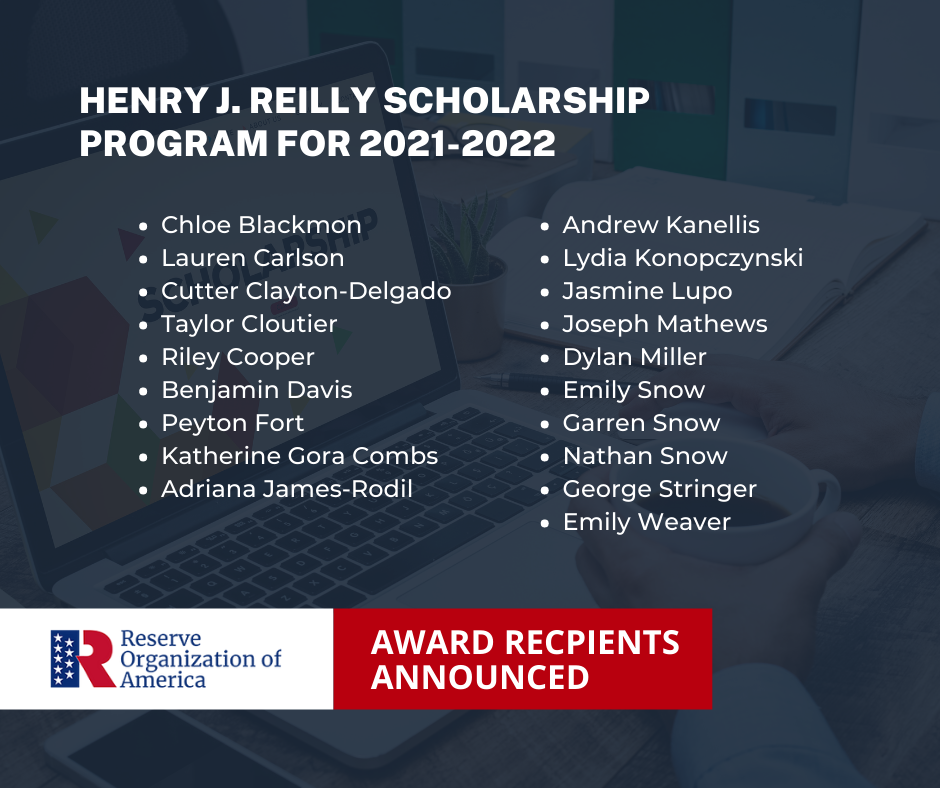
Nation's only exclusive advocate for Reserve and National Guard supports young students With your generous contribution, I am in a stronger position to pursue my passion to improve healthcare delivery though the integration of hospitality and better design.””— Peyton Fort, Cornell healthcare administration WASHINGTON, DC, UNITED STATES, August 2, 2021 /EINPresswire.com/ -- Today the Reserve Officers Association of the United States, now doing business as the Reserve Organization of America, announced this year’s 20 Henry J. Reilly Scholarship recipients, who will each receive $2,500 toward their studies. “Supporting the educational goals of these outstanding scholars selected for this year’s Henry J. Reilly Scholarships is a source of pride and stewardship for ROA,” said National President Col. Judith Davenport, U.S. Army (Ret.). “We wish them great success as they go forward into a future of potential secured by those who serve our nation in uniform.” Scholarship recipients will attend institutions of higher learning including the College of Wooster, Cornell University, Dartmouth College, Dickinson College, Georgia College & State University, North Carolina State University at Raleigh, Northeastern University, Oklahoma State University-Main Campus, Radford University, San Diego State University, Southern Methodist University, Syracuse University, University of California-Berkeley, University of Miami, University of North Carolina at Chapel Hill, University of Scranton, The University of Texas at Austin, University of Virginia-Main Campus, Vassar College, and Virginia Polytechnic Institute and State University. “Please accept my gratitude for not only the monetary award, but also the recognition of my efforts. With your generous contribution toward my education, I am in a stronger position to pursue my passion to improve healthcare delivery though the integration of hospitality and better design,” wrote Peyton Fort, a Cornell healthcare administration undergraduate. “When I phoned my 80 year-old granddad today and told him that thanks to his service, my twin siblings and I had just received emails that we had been selected to receive Henry J. Reilly Memorial Scholarships, his reaction was memorable. He said that he could have never predicted that his service would one day benefit the educations of those he loves the most,” wrote Virginia Polytechnic Institute and State University biochemistry student Garren Snow. “My twin brother, older brother, and I are all three going to college in the fall, and my family did not know how they were going to be able to afford it,” wrote Garren’s sister Emily, studying nursing at Radford University. Recipients of the academic year 2021-2022 Henry J. Reilly Scholarships are (not all recipients released their names for publication):
- Chloe Blackmon
- Lauren Carlson
- Cutter Clayton-Delgado
- Taylor Cloutier
- Riley Cooper
- Benjamin Davis
- Peyton Fort
- Katherine Gora Combs
- Adriana James-Rodil
- Andrew Kanellis
- Lydia Konopczynski
- Jasmine Lupo
- Joseph Mathews
- Dylan Miller
- Emily Snow
- Garren Snow
- Nathan Snow
- George Stringer
- Emily Weaver
“At UC Berkeley this fall, I’ll pursue a BS in Business Administration and a BA in Political Economy. Next year, I'll study economics, global policy, and logistics in London. Your support enables me to participate fully in this foreign study program and I’m very grateful for that. I take great pride in representing the ROA,” wrote Benjamin Davis. “This scholarship will provide the cornerstone of my opportunities to attend SMU. I would like to thank all accompanying members for the selection of the fund. I personally want to thank—in remembrance of the late General Henry J. Reilly, who served as a Field Artilleryman, as did my father, Harold T Mathews, Maj. (Ret.) For in his name, I will continue a strong academic potential for higher education,” wrote Joseph Mathews, majoring in political science. ROA congratulates these exemplary scholars and wishes them success in their studies and the pursuit of their dreams. Henry J. Reilly Scholarships are awarded for vocational, undergraduate, and graduate studies on a competitive basis of academics, leadership and service, and potential for contribution to society. They are funded within the ROA’s STARs Foundation, a 501(c)3 non-profit organization. STARs supports the work of ROA to enhance the security of the nation by sustaining a strong Reserve force and supporting citizen-warriors and their families who serve our country so faithfully. Scholarship applicants must be members of ROA or direct family members. Brig. Gen. Henry J. Reilly was ROA’s first president; an artillery officer, he commanded an infantry brigade in the 42nd “Rainbow” Infantry Division in World War I. He helped Gen. John “Black Jack” Pershing found the Reserve Officers Association of the United States in 1922, to support a strong national defense in response to precipitous post-war reductions in the military. After military service, General Reilly was a journalist, historian, and lifelong proponent of education. ROA, whose membership is open to all ranks, received its congressional charter in 1950 and is the only national military organization with an exclusive focus on support of the nation’s uniformed reserve components: the National Guard, Army Reserve, Navy Reserve, Marine Corps Reserve, Air Force Reserve, Coast Guard Reserve, those serving in the new Space Force; and the reserve components of the U.S. Public Health Service and the National Oceanic and Atmospheric Administration. The Henry J. Reilly Memorial Library and Scholarship Fund is a 501(c)3 charitable organization (EIN 52-6056998) funded by donations, which can be mailed to ROA Headquarters at 1 Constitution Avenue NE, Washington, DC 20002, or made online at https://roa.site-ym.com/donations/. Donations are tax-deductible to the extent permitted by law. For information about ROA, please go to www.ROA.org.
ROA
1 Constitution Avenue NE
Washington, DC 20002
Contact: Jeff Phillips 202-646-7701/jphillips@roa.org
This post has not been tagged.
Permalink
| Comments (0)
|
|
|
Posted By Maj. Lonnie Mettler, Walla Walla Washington Chapter,
Thursday, July 8, 2021
Updated: Wednesday, July 7, 2021
|
There are special days designated to honor Veterans that have served. These days may include ceremonies, parades, placement of flags, placement of wreaths, and/or purchase of poppies. However, the most visible and the most powerful recognition of a Veteran is the headstone under which they have been laid to rest. The responsibility of honoring our Veterans should not fall solely on the shoulders of the families. It is also the responsibility and duty of the public for which the Veteran conducted his or her service. Unfortunately, after several generations the families and the public begin to lose sight and forget the sacrifices of Veterans. Visits to graves to honor the memory of a Veteran begins to fade away. Veteran headstones tend to deteriorate over time, making them unsightly and the inscriptions unreadable. Causes of deterioration include weathering, growth of moss/fungus, burrowing animals, fallen tree limbs, shade tree roots, poor water drainage, landscape maintenance methods, and vandals. If your Veteran is in a National Cemetery or a State Cemetery, the effects of those impacts previously mentioned are dealt with quickly and properly. However, in cemeteries under the jurisdiction of various municipalities with elected officials, the conditions of the Veteran sections is often overlooked and underfunded. Yet cemeteries are a popular location for people to walk, run, bicycle, etc. They are incredibly quiet and peaceful, often allowing for reverence and needed reflection. Signature Project The Walla Walla Chapter, Washington Department of the Reserve Organization of America, has taken on a signature project to improve the appearances and conditions of Veteran headstones and markers locally. The effort involves two cemeteries located within the city of Walla Walla, Wash. The Fort Walla Walla Post Cemetery (FWWPC) and the Mountain View Cemetery (MVC). An American-Indian Wars outpost named Fort Walla Walla was established in 1856. It was one of the longest-occupied military posts in the Northwest and was the center of regional activity for much of its existence. Throughout its history, the post has been home to Dragoon, Infantry, Artillery and Cavalry units. The presence of the fort helped keep peace between the Euro-American settlers and the native tribes during much of this period. The FWWPC was established in 1858 and has 142 grave markers with several graves appearing to be mass graves moved from other locations. The actual number of burials is not certain. An Army Quartermaster Report published in 1903 indicated there were 159 soldiers and 24 civilians interred at FWWPC for a total of 183. The Fort was closed in 1910. Over time Fort Walla Walla was transferred to several agencies to include a portion transferred to the City of Walla Walla for use as a park: including the designated cemetery area. This transfer occurred in 1958. The second cemetery, MVC, has burials dating back to the 1850s. MVC is an active cemetery and is comprised of the city cemetery and cemeteries owned by the Masonic Lodge, International Order of Odd Fellows, and the Catholic Church. There are several areas designated for Veterans to include, the Civil War, Spanish-American War, World War I, World War II, Korean War, Vietnam War, Persian Gulf War, and the Afghanistan War. There are more than 3,000 Veterans laid to rest, most of them in the designated Veterans sections and the remainder spread throughout the MVC mixed with family plots and in the mausoleums. Description of the Signature Project Headstone Cleaning The most basic task to restoring dignity and honor is to maintain the appearance of the headstones. Local teams of volunteers have been organized to periodically tend to the cleaning of Veteran headstones. A biodegradable cleanser (known as D/2), water, and a natural bristle brush, with the help of a good strong arm, will clean up and preserve stone markers nicely. If this routine is continued on a scheduled basis, the headstone will look good for many years. A different technique using Mission Restore for cleaning bronze markers has shown great results. Unfortunately, both processes are labor intensive. Pressure washing is often suggested but this can cause more damage to the headstone than time and nature. Pressure washing is highly discouraged. 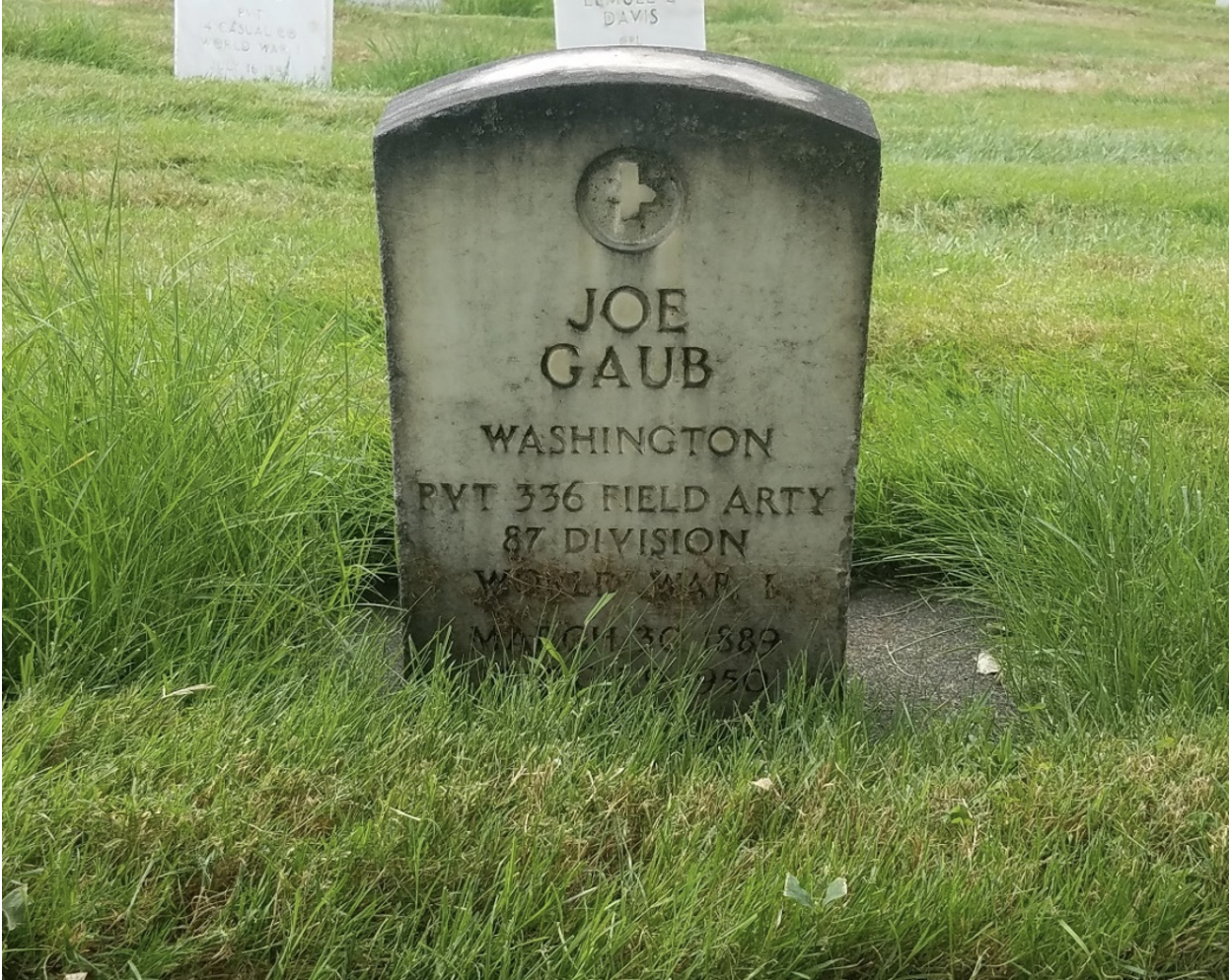
Example of a stone marker in need of cleaning in Mountain View Cemetery, Walla Walla, Washington. Headstone Restoration and Replacement Stone and the quality of the stone used has varied over the years. Some stone weathers more quickly or is damaged more easily by maintenance methods. The fix to damaged headstones is replacement or realignment. However, the original placement of graves in our Veteran sections was never consistent over the years. Efforts to fix the problems may include re-contouring and re-landscaping the ground for improved drainage, placement of headstones in improved foundation anchor points, and alignment of headstones in a uniform manner which reflects the appearance of dignity and honor to these Veterans which they deserve from all of us. The level of effort to restore or replace a headstone is more equipment intensive and it comes at a greater cost. Fundraising, seeking grants, asking for in-kind donations and services from professional and skilled community members, and partnering with others is critical in this venture. 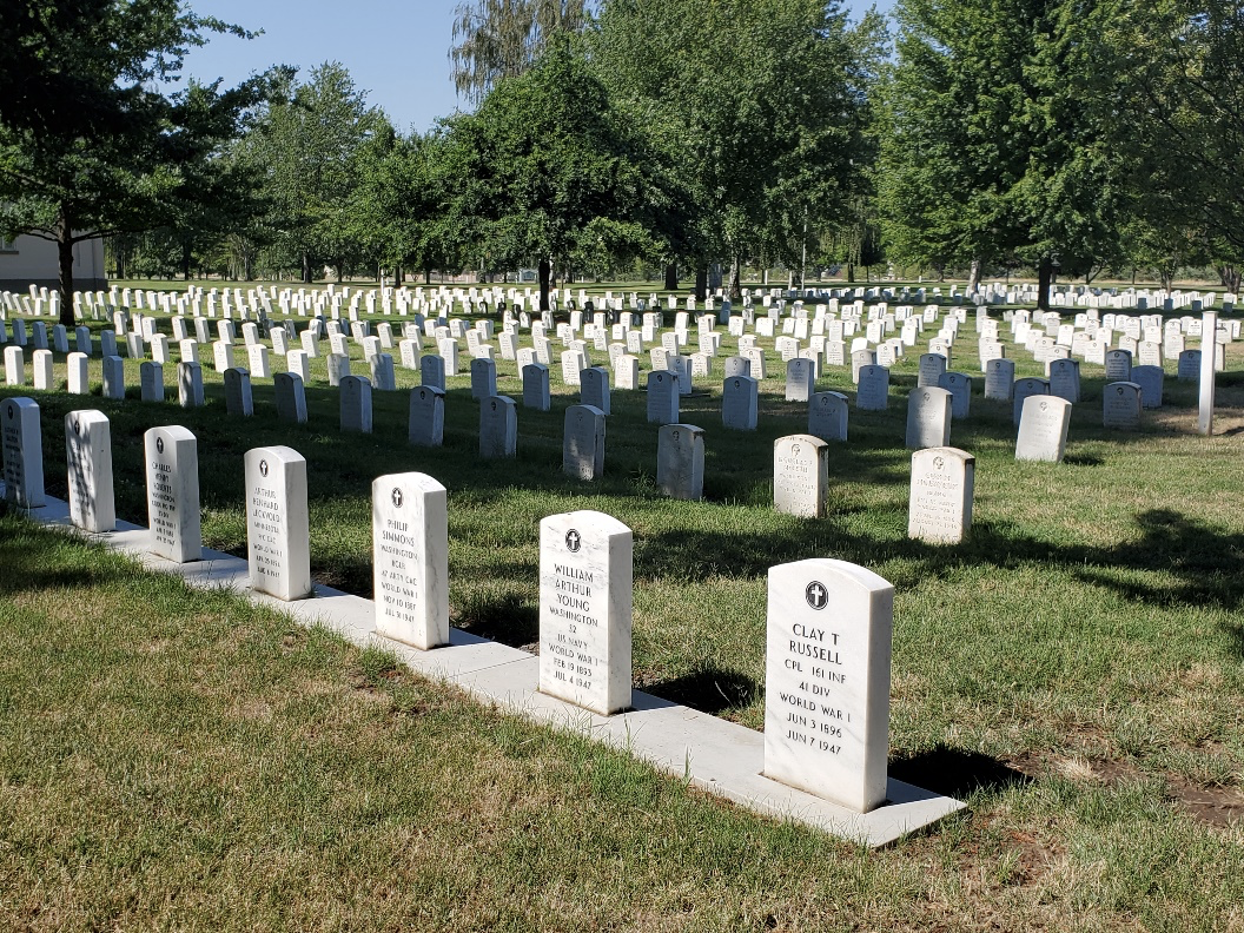
After re-contouring the landscape, the first row of headstones was replaced in a new anchor system technology in Fall 2019. Mountain View Cemetery, Walla Walla, Washington.
Other Actions In addition to cleaning, restoring, or replacing headstones, there are opportunities to make our Veteran sections more inviting to family, friends, and the public. - Ground Penetrating Radar studies can help determine if other burials exist. Often grave markers disappear leaving uncertainty on the number of burials. In our situation, the actual number of soldiers, their families and some Native American Indians buried at FWWPC is unclear.
- Sharing the story of our Veterans who have been laid to rest and interpreting the history of the actions our country asked these Veterans to perform is very educational and brings us all closer to their sacrifices.
- Finding ways to protect the headstones from vandalism, thru use of security measures can be worth the cost.
- Enhancing the serenity of our cemeteries by removing old and dying trees, replacing them with a better species of trees. Proper distancing of shade trees from the grave site will reduce damages from roots as well as falling branches.
- Implementing ways to share burial information and locations through web-based databases and improved mapping will benefit not only the general public but encourage visits by family and genealogist working on family histories.
Veteran Headstone Project Partners Walla Walla Chapter’s progress has been slow as we build a support base to Honor Those who Served. Initial efforts to build relationships with those who have similar interests has allowed for common ground and plan development. - The City of Walla Walla owns both cemeteries so are responsible for the operation and maintenance.
- Fort Walla Walla Museum has an important role in the interpretation of the history surrounding Fort Wall Walla and the U.S. Indian Wars in Southeastern Washington, Northeastern Oregon, and Central Idaho
- Confederated Tribes of the Umatilla Indian Reservation might have Tribal Members or members of other Northwest Tribes buried in the FWWPC and they have the technology for performing Ground Penetrating Radar studies.
- Sons of Union Veterans of the Civil War have a Monument & Memorial Grant Fund intended to assist Camps and Departments in their efforts to refurbish and restore Civil War related monuments and memorials. MVC falls within the footprint of Department of Columbia and Fort Walla Walla Camp No. 3.
Walla Walla Chapter of the ROA meets quarterly with the Veteran Headstone Project Partners. We monitor all ROA volunteer hours and submit them to the City of Walla Walla monthly.
This post has not been tagged.
Permalink
| Comments (0)
|
|
|
Posted By ROA Staff,
Tuesday, July 6, 2021
|

During the 2021 National Convention,
October 21-24, 2021, the convention body will elect 12 new members to the Executive Committee. For each service section: vice president, junior vice president, and two executive committeemen.
For the Naval Services, one executive committeeman will be from the Navy, U.S. Public Health Service, or National Oceanic and Atmospheric Administration, the other will be from the Marine Corps, PHS, or NOAA.
Our first candidate has been announced. Capt. Henry Plimack is running for Naval Services Vice President. Visit ROA’sCandidates’ Corner
to learn more about the candidates.
Interested in serving your association as a national leader? All you need is your department’s endorsement. A letter signed by your department president or secretary should be sent to Diane Markham (dmarkham@roa.org or 1 Constitution Ave NE, Washington DC 20002).
Tags:
2021 Candidates Corner
2021 National Convention
Permalink
| Comments (0)
|
|
|
Posted By ROA Staff,
Saturday, June 26, 2021
Updated: Friday, June 25, 2021
|
British Armed Forces Day is a chance to show your support for the men and women who make up the Armed Forces community: from currently serving troops to Service families, veterans and cadets. There are many ways for people, communities and organisations across the country to show their support and get involved. Armed Forces Day celebrations begin on Monday, June 21 when the Armed Forces Day flag is raised on buildings and famous landmarks around the country. Reserves Day will also provide an opportunity for the country to recognise our Reserve Forces. Physical and virtual events are being held across the country to mark this year’s Armed Forces Day. Find your local event. Events may be affected by COVID-19. Please contact the individual event organisers, using the contact details provided, for further information on specific events. Showing support for the Armed Forces provides a much valued morale boost for the troops and their families. You can find out more about what they are doing at home and around the world by visiting the official sites of the Royal Navy, British Army and Royal Air Force. The public show their support for the Armed Forces on Armed Forces Day, but did you know the Armed Forces Covenant outlines how the Government, businesses and communities support Armed Forces personnel past and present throughout the year? Find out more here. The Armed Forces The UK Armed Forces defend the UK and its interests. They are busy working around the world, promoting peace, delivering aid, tackling drug smugglers, providing security and fighting terrorism. Veterans A veteran is anyone who has served in the HM Armed Forces at any time (including National Servicemen, Regulars and Reserves). Armed Forces Day celebrates their continued role within the military community. You can find out more information about support for Veterans on the Veterans-UK website or by calling Veterans UK on 0808 1914 218. Reservists Reservists give up their spare time to serve in the Reserve Forces, balancing their civilian life with a military career to ensure that should their country require them, they would be ready to serve. An annual Reserves Day celebrates their contribution to the Armed Forces. Reserves Day is the Wednesday ahead of Armed Forces Day – June 23. Cadets The Cadet Forces (Sea Cadets, Army Cadets, Air Cadets and the Combined Cadet Force) currently support over 130,000 young people in more than 3,000 locations across the UK. Cadets learn life and career building skills as well as gaining vocational qualifications. Families Our Armed Forces couldn’t do their job without the incredible support of their family and friends. Charities Although Armed Forces Day is not a charitable event, the Armed Forces have the support of several UK charities and many local events will offer opportunities to support them. To find out more about Armed Forces charities please see here.
This post has not been tagged.
Permalink
| Comments (0)
|
|
|
Posted By ROA Staff,
Friday, June 25, 2021
|
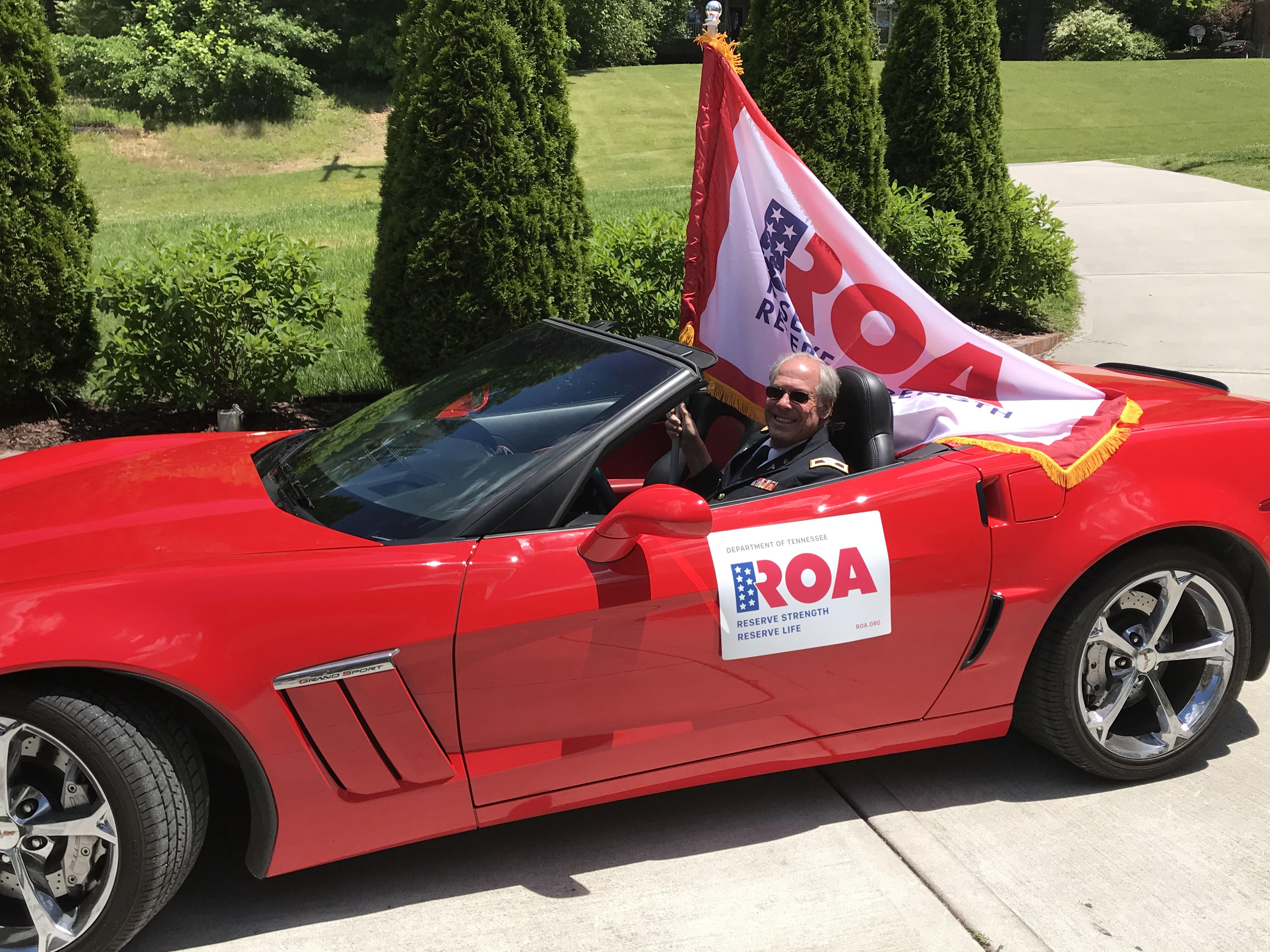
The Department of Tennessee President, Retired Col. John Davenport and Department of Tennessee Treasurer, Retired Lt. Col. Scott Hardin, participate in the 72nd Chattanooga Armed Forces Day Parade. The parade is the longest consecutive running Armed Forces Day Parade in the country. After a scaled down version last year due to COVID it was wonderful to have 125 units participate this year. The Dept of TN was placed near the front of the parade units! The parade this year paid tribute to a hometown hero Charles Coolidge, Medal of Honor recipient who passed away earlier this spring at 99 years of age. There are more than 22,000 vets in Hamilton County and around 13,000 in Chattanooga proper, needless to say the parade was a great success! 
Retired Col. John Davenport (left) and Department of Tennessee Treasurer, Retired Lt. Col. Scott Hardin, participate in the 72nd Chattanooga Armed Forces Day Parade. 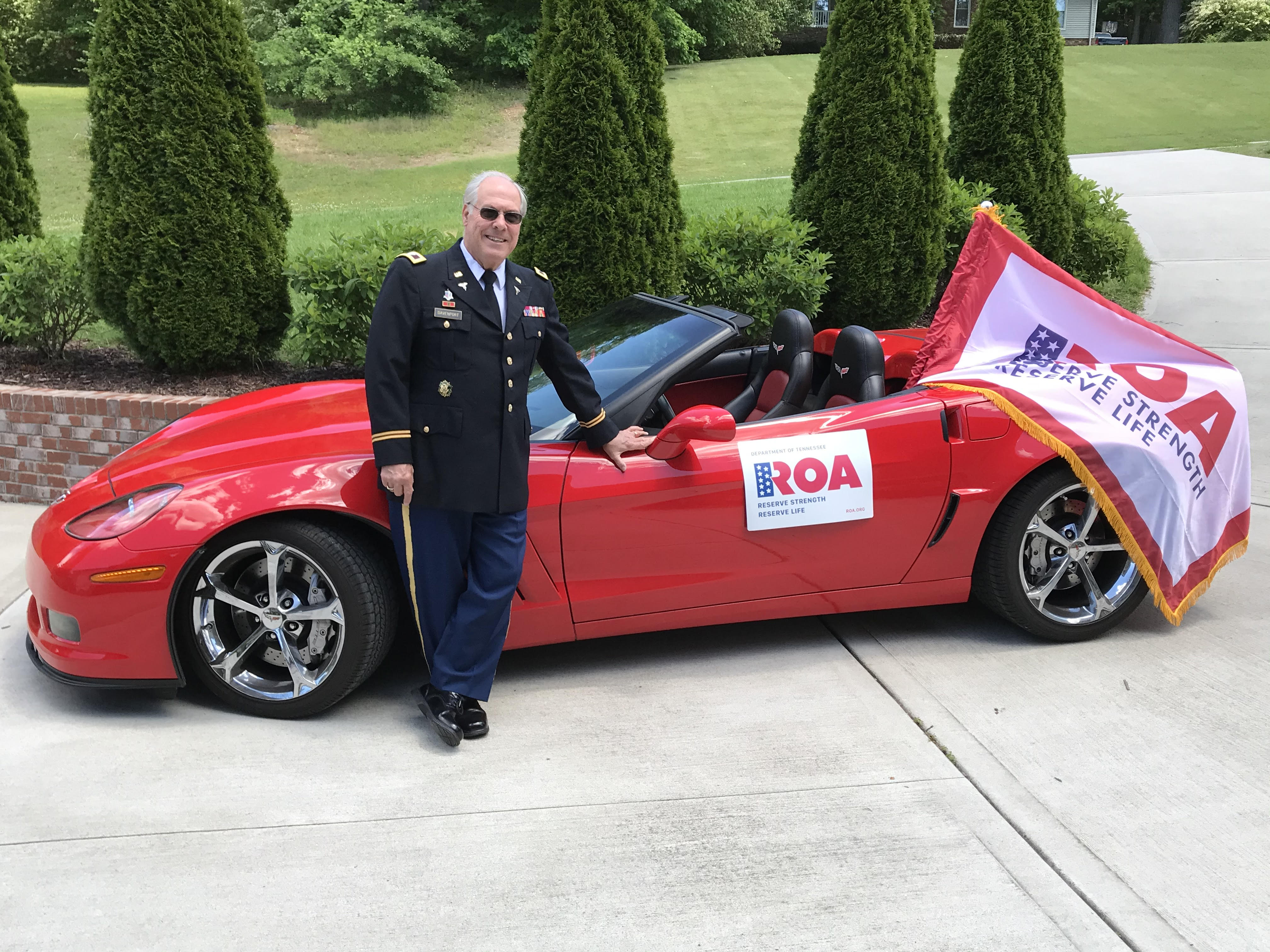
Tags:
Armed Forces Day
Department of Tennessee
Permalink
| Comments (0)
|
|
|
Posted By ROA Staff,
Monday, June 14, 2021
|
 The U.S. Army was founded on June 14, 1775, when the Continental Congress authorized enlistment of expert riflemen to serve the United Colonies for one year.
America's Revolutionary War began on April 19, 1775 with exchanges of musketry between British regulars and Massachusetts militiamen at Lexington and Concord. As their fellow citizen soldiers from New Hampshire, Connecticut and Rhode Island responded to the alarm, a state of war existed between the four colonies and the British government. Called the Army of Observation, a force of New Englanders surrounded Boston and had the British troops who occupied it under siege, but they needed help. They appealed to delegates who represented all thirteen colonies to join them in the struggle for American liberty.
When the delegates to the Second Continental Congress convened in Philadelphia on May 10, they soon learned that armed men commanded by Ethan Allen and Benedict Arnold had captured the British forts at Ticonderoga and Crown Point on Lake Champlain in New York. The constitutional crisis, in which Americans sought a redress of grievances from the British king and Parliament, had become open hostilities. The delegates realized that even though many desired reconciliation, they would now have to address the new military situation. The Congress took the next step that eventually transformed a local rebellion into a war for independence when it established the Continental Army: the force we know today as the U.S. Army.
The Army Reserve of today can trace its roots as a national Citizen-Soldier force as far back as the French and Indian War (1756-1763) on through the Civil War (1861-1865) to the Spanish-American War and Philippine Insurrection (1898-1902). From its birth in 1776 through the nineteenth century, the United States remained a regional power, protected from invasion by the vast expanses of the Atlantic and Pacific oceans. A large standing army was not required, and the nation's defense was based primarily on the militias of individual states.
The United States Congress created an official Army Reserve in order to place a large portion of American Citizen-Soldiers under federal control during times of peace and war. Financially, this was the best option for maintaining and projecting a land force that rivaled those of other world powers. This decision came into play during World War I (1917-1919) when the Army mobilized nearly 90,000 Reserve officers, one-third of which were medical doctors. More than 80,000 enlisted Army Reserve Soldiers served. The individual Army Reserve Soldiers were placed into newly organized units, trained, and then deployed.
Branch Birthdays
Since 1775, Congress has also authorized the establishment of certain branches within the Army. Today, these are represented by the Army's basic and special branches. Below is information about the legal authority for the Army's branches and additional information about each branch's birthday.
Army Birthdays
The U.S. Army was founded on June 14, 1775, when the Continental Congress authorized enlistment of expert riflemen to serve the United Colonies for one year. For more on the history of the U.S. Army birthday, click here: the Army birthday.
Since 1775 Congress has also prescribed the organization and structure of the Army. This includes various branches into which Soldiers can be assigned. In many cases these branch distinctions are reflected in the Army's system for designating units and in the U.S. Army Regimental System. The Army Organization Act of 1950 (enacted June 28, 1950) set forth the legal basis for the various basic and special branches in the current Army (see Title 10, United States Code, Sections 3063 and 3064). It also permits the creation of other branches as the Secretary of the Army considers necessary. See the note below for more information on The Army Organization Act of 1950.
In recognition that many of today's branches have existed since 1775 and in order to enhance esprit de corps, the Army recognizes official branch birthdays (see Department of the Army General Orders, No. 19, dated October 31, 1978 and subsequent announcements). Listed below are the Army's basic and special branches currently in existence, their birthdays, and the relevant authorities.
NOTE: The Army Organization Act of 1950 was enacted on June 28, 1950. A full copy of the Act was published in Department of the Army Bulletin No. 9, dated July 6, 1950. The changes the Act had on the Army's branches and the titles of the various branch chiefs were announced in Department of the Army General Orders No. 23, dated July 20, 1950 (as amended). Finally, an article from the August 1950 edition of Army Information Digest discusses the Act's major changes.
Sources:
This post has not been tagged.
Permalink
| Comments (0)
|
|
 Blog Home
 All Blogs

 RSS
RSS