|
|
Posted By Matthew Schwartzman, ROA director of legislation,
Monday, June 30, 2025
|
ROA urges Congress to reform TAP, pass GI Bill parity, and expand benefits for Reserve and Guard members at a congressional hearing. Citizen-warriors and their families navigate military to civilian transitions repeatedly throughout their careers. Despite this, TAP remains largely built around a single end of career transition.”— Matthew Schwartzman WASHINGTON D.C. -- On Wednesday, June 11, the Reserve Organization of America testified before the U.S. House Committee on Veterans’ Affairs Subcommittee on Economic Opportunity. With nearly twenty bills on the docket, ROA submitted statements for the record addressing close to a dozen proposals. ROA’s primary focus, however, was H.R. 3387, the Enhancing the Transitioning Servicemember’s Experience Act. Introduced by Subcommittee Chairman Derrick Van Orden of Wisconsin’s third congressional district, the bill would significantly improve the Transition Assistance Program for all servicemembers, especially those in the Reserve and National Guard. Representing ROA at the hearing was Matthew Schwartzman, director of legislation and military policy. Schwartzman emphasized the need to tailor TAP to meet the unique needs of reserve component members, who often face repeated transitions between military and civilian life. “Unlike their active-duty counterparts, members of the Reserve and National Guard don’t transition just once; they navigate that shift repeatedly throughout their careers,” said Schwartzman. “But you don’t have to take my word for it.” Schwartzman shared the story of a Marine Corps reservist who told ROA that TAP instructors had “zero understanding” of the reserve components. When the reservist asked whether any of the content applied to him, he received only a “blank stare” in response. The ETS Act includes several provisions supported by ROA that aim to close these gaps and better support transitioning reserve component members. These include: - Establishing a tailored TAP track for reserve component members.
- Providing flexibility for reservists to waive requirements when appropriate.
- Authorizing repeat participation in TAP preseparation counseling.
- Fully integrating spouses into the transition process.
- Aligning TAP more closely with the VA’s Solid Start program.
- Creating a centralized online hub for transition-related resources.
While Schwartzman’s testimony focused almost exclusively on ROA’s desired reforms for TAP, he also reiterated the organization’s highest education priority: the GI Bill Parity Act. At the hearing, Schwartzman referred the committee to a statement submitted by ROA policy fellows Peter Donlon and Jake Fales to the Senate Veterans’ Affairs Committee in support of GI Bill parity. A broader statement was authored by Fales and policy and communications fellow Hannah Miller, offering support and technical assistance on legislation that would expand access to housing and education benefits, modernize VA communications, and extend key services by broadening the definition of “veteran” to fully include reserve component members. “The Delivering Digitally to Our Veterans Act enables streamlined electronic communication regarding a service member's well-earned education benefits,” said Miller. “This technology has the potential to revolutionize how veterans receive vital information.” “The Every Veteran Housed Act expands the definition of ‘veteran’ within homelessness benefits to include Reserve and National Guard members,” added Fales. “ROA believes that every veteran deserves a safe place to call home after a life of service.” “ROA is urging Congress to pass the Guard and Reserve GI Bill Parity Act and to work with the Office of Management and Budget to complete long-overdue duty status reform,” said Donlon. “Reservists can perform the same missions as their active-duty counterparts, yet they often do not receive the same benefits. This is an injustice that must be addressed.” Together, these statements reflect ROA’s comprehensive and coordinated advocacy for citizen-warriors and their families. From transition assistance and education to housing and benefit parity, ROA continues to lead the charge on Capitol Hill to ensure that those who serve in the Reserve and National Guard are never treated as second-class servicemembers. 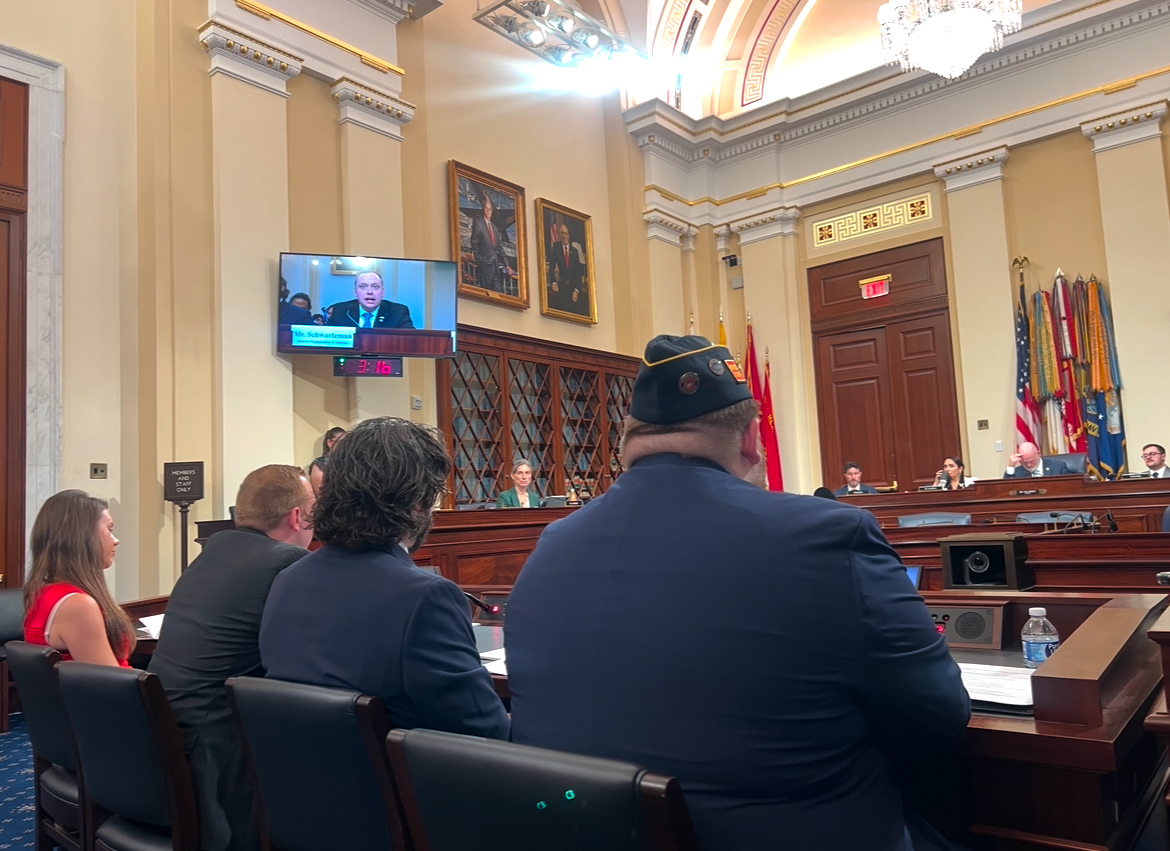
ROA's Director of Legislation, Matthew Schwartzman, testifies before Congress June 11, fighting to reform TAP for citizen-warriors and their families.
Tags:
testimony
Permalink
| Comments (0)
|
|
|
Posted By ROA Public Relations Officer Capt. Henry E. Plimack, USCGR (Retired),
Monday, June 30, 2025
|
Over spring break, Dr. Shari Veil, Dean of the University of Nebraska–Lincoln College of Journalism and Mass Communications, took students abroad for the first international offering of “Military Public Affairs,” a course she previously taught on campus at Nebraska. This inaugural study abroad program immersed students in the heart of international governance and military communications in Brussels, Belgium. 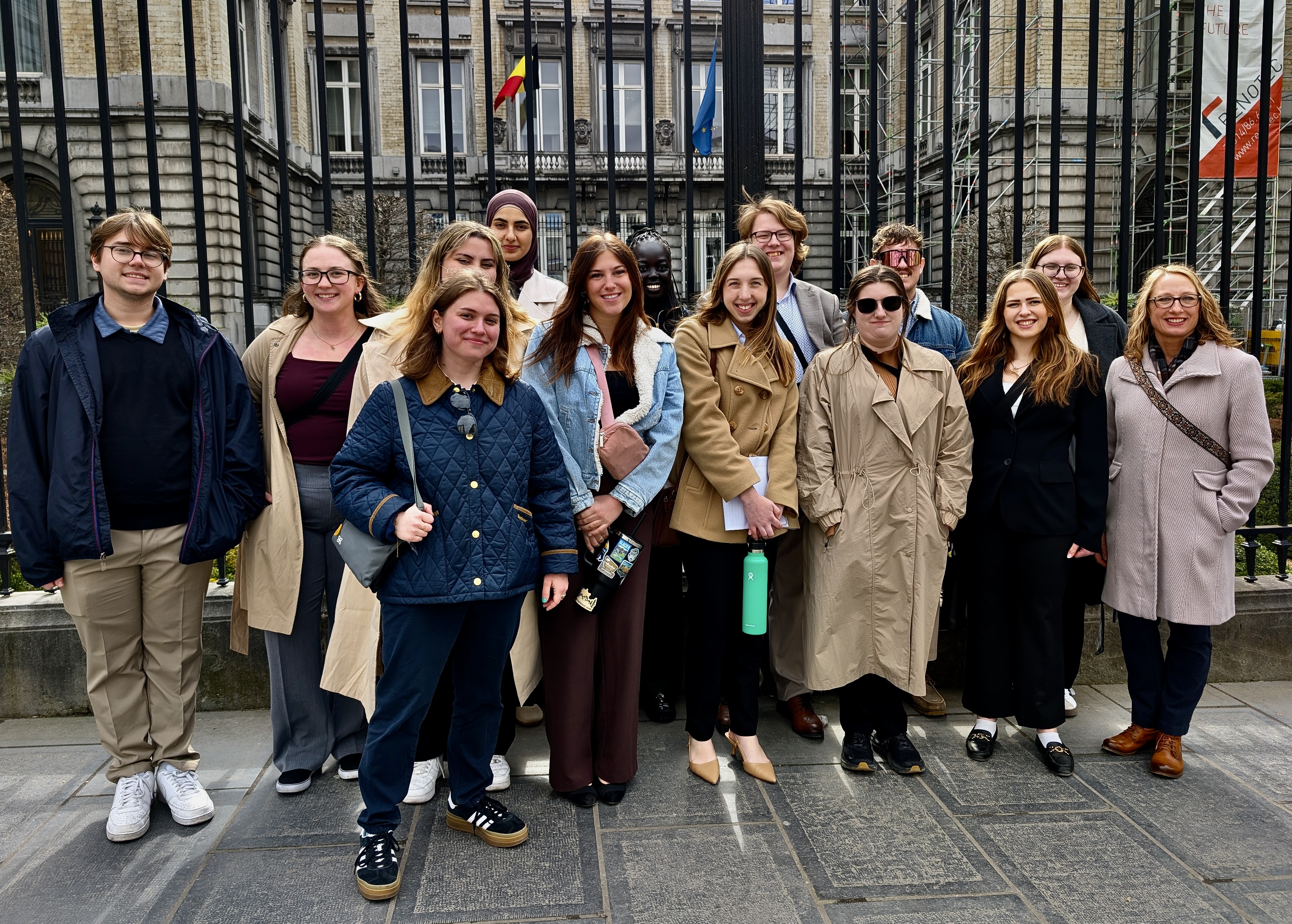
The course provided firsthand experience for students, including several ROTC cadets and reservists, by connecting them directly with public affairs professionals working within global governments. Drawing on her military network, Veil worked with Major General Craig Strong, Director of the Nebraska Military Department and Nebraska Emergency Management, and Captain Henry E. Plimack, USCGR (Ret), Naval Services Section Vice President at the Reserve Organization of America (ROA) to help coordinate visits to key international institutions shaping defense and diplomacy.
During the week abroad, students visited the Supreme Headquarters Allied Powers Europe (SHAPE), North Atlantic Treaty Organization (NATO) Headquarters, European Union Council, Belgian Parliament, and the State Department’s European Media Hub. These visits, along with meetings with public affairs officers and foreign officials, gave students an inside look at how communication strategies influence diplomacy, defense, and policymaking at the highest levels.
Veil’s goal was to expand students’ understanding of military and public service careers, emphasizing the crucial work of public affairs officers, communicators, and strategic advisors who shape public perception, manage crises, and facilitate communication between governments and their publics.
“There are so many different career opportunities in the military,” Veil said. “I wanted to make sure our students were exposed to those opportunities, here in Nebraska and around the world.”
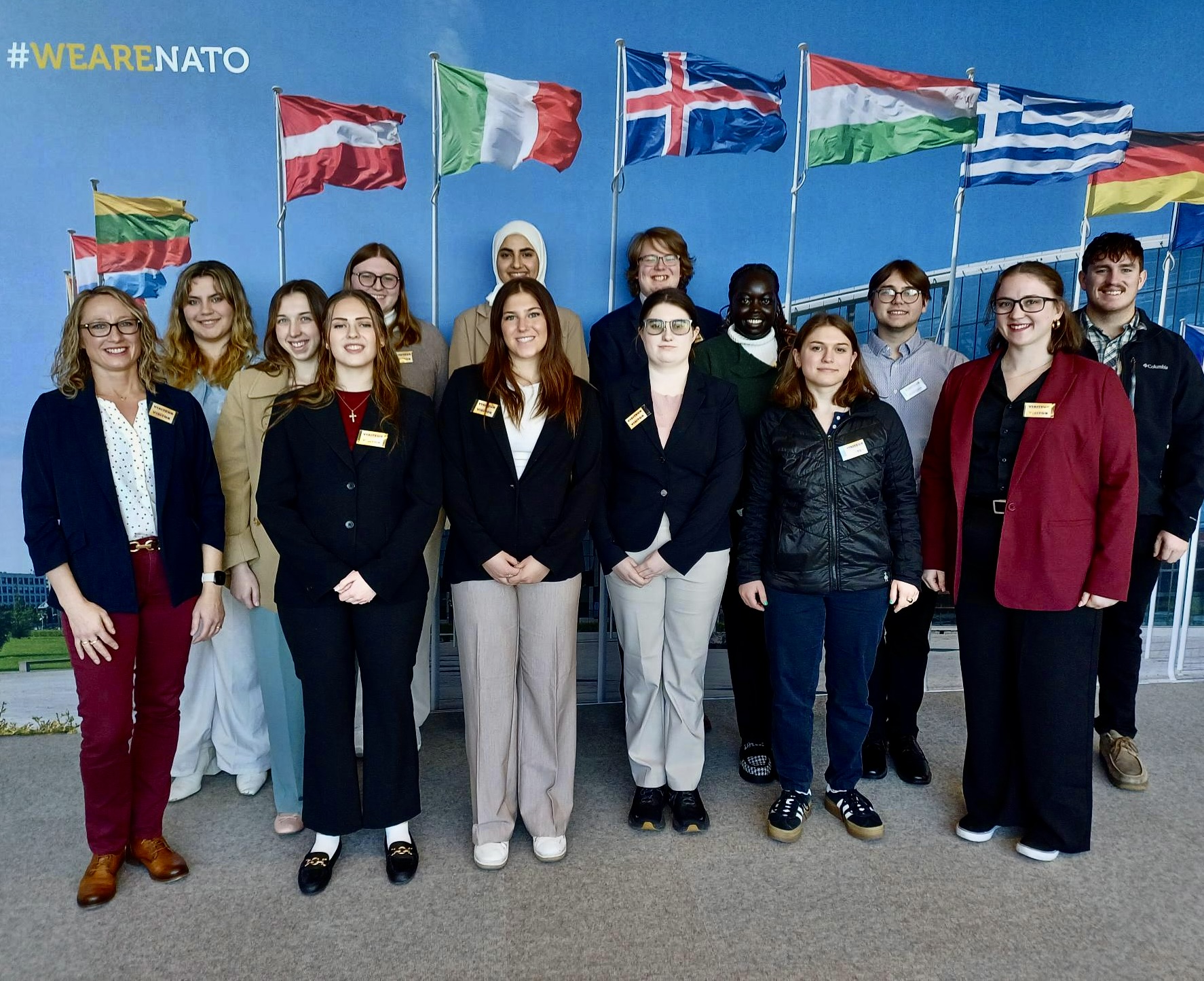
In preparation for the travel portion of the course, Veil brought in guest speakers who shared their experiences and provided insight on the role of public affairs officers in the military. Among the guest speakers were several prominent Naval officers including; Vice Admiral (Ret.) Ted Carter, President of The Ohio State University; former President of the U.S. Naval War College; Captain Dave Hecht, Director of Public Affairs and Outreach for United States Fleet Forces Command; Captain Patrick Evans, Director of Public Affairs for U.S. Central Command; Commander Jennifer Franco, Public Affairs Officer for the Joint Planning Support Element and former ROA Executive Committee member; and Lieutenant Commander Courtney Callaghan, Force Public Affairs Officer for the Harry S. Truman Carrier Strike Group, who Zoomed into the class while on deployment in the Red Sea.
Additional speakers with strong Nebraska ties included: Major General Craig Strong, The Adjutant General Nebraska National Guard; Colonel Loren Bymer, USA (Ret), former Director of Public Affairs for U.S. Army Special Operations Command; Colonel Brus Vidal, USAF, Director of Public Affairs for U.S. Strategic Command; Lieutenant Colonel Kevin Hynes, (Ret), Chief of Public Affairs for the Nebraska National Guard Joint Forces Headquarters; Major Matthew Miller, USAF (Ret), Deputy Chief of Public Affairs for U.S. Strategic Command; and Staff Sergeant Lisa Crawford, Public Affairs Specialist for the U.S. Army Corps of Engineers.
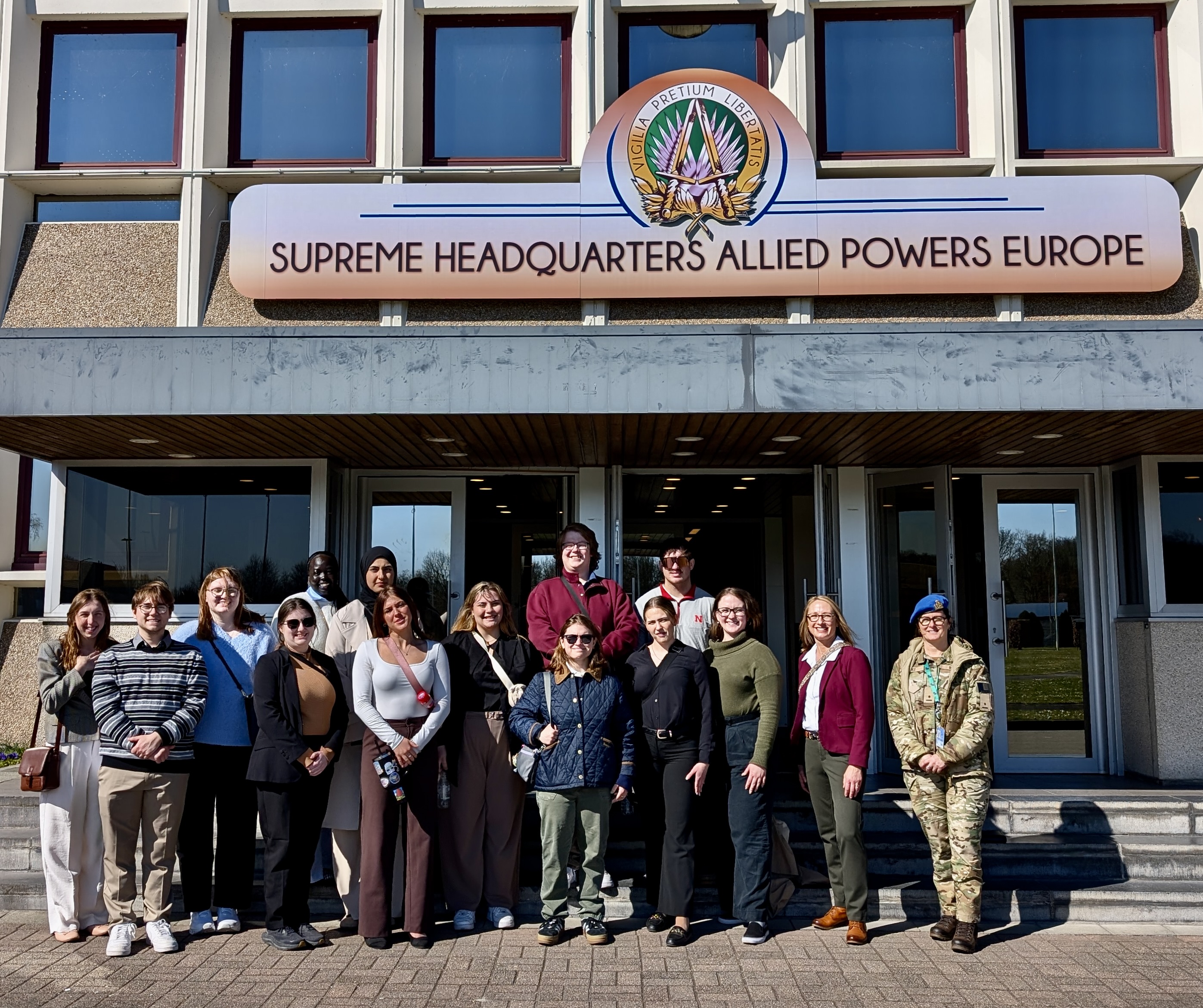
For many students, the experience was transformative. Meeting high-level communicators and commanders not only deepened their understanding of military public affairs, but it also opened new possibilities for their own futures.
Senior political science major Kendall Bartling said the opportunity to experience the course abroad made all the difference. “I felt that the course being taught on-site in Brussels was not just unique, but integral to my understanding and takeaways from the trip,” Bartling said. “Meeting PAOs from a variety of countries, including the U.S., brought a lot of value.”
Isabelle Bree, a senior philosophy major enlisted in the Nebraska National Guard, said the experience changed her perspective on the field. “This class challenged me to understand the role of public affairs specifically in a military sense,” Bree said. “A PAO’s role in media, communication, and public relations is more critical than I thought prior to this class.”
“Bringing students into these international spaces exposed them to opportunities they never imagined,” Veil said. “I hope they came back with a stronger sense of what’s possible, and the confidence to pursue those paths.”
This inaugural international course marked a significant milestone for the program, blending academic rigor with immersive real-world experiences. By the end of the week in Brussels, students left with a deeper appreciation for the vital role of public affairs in global governance and a clearer vision for how their own careers might bridge communication, diplomacy, and public service. 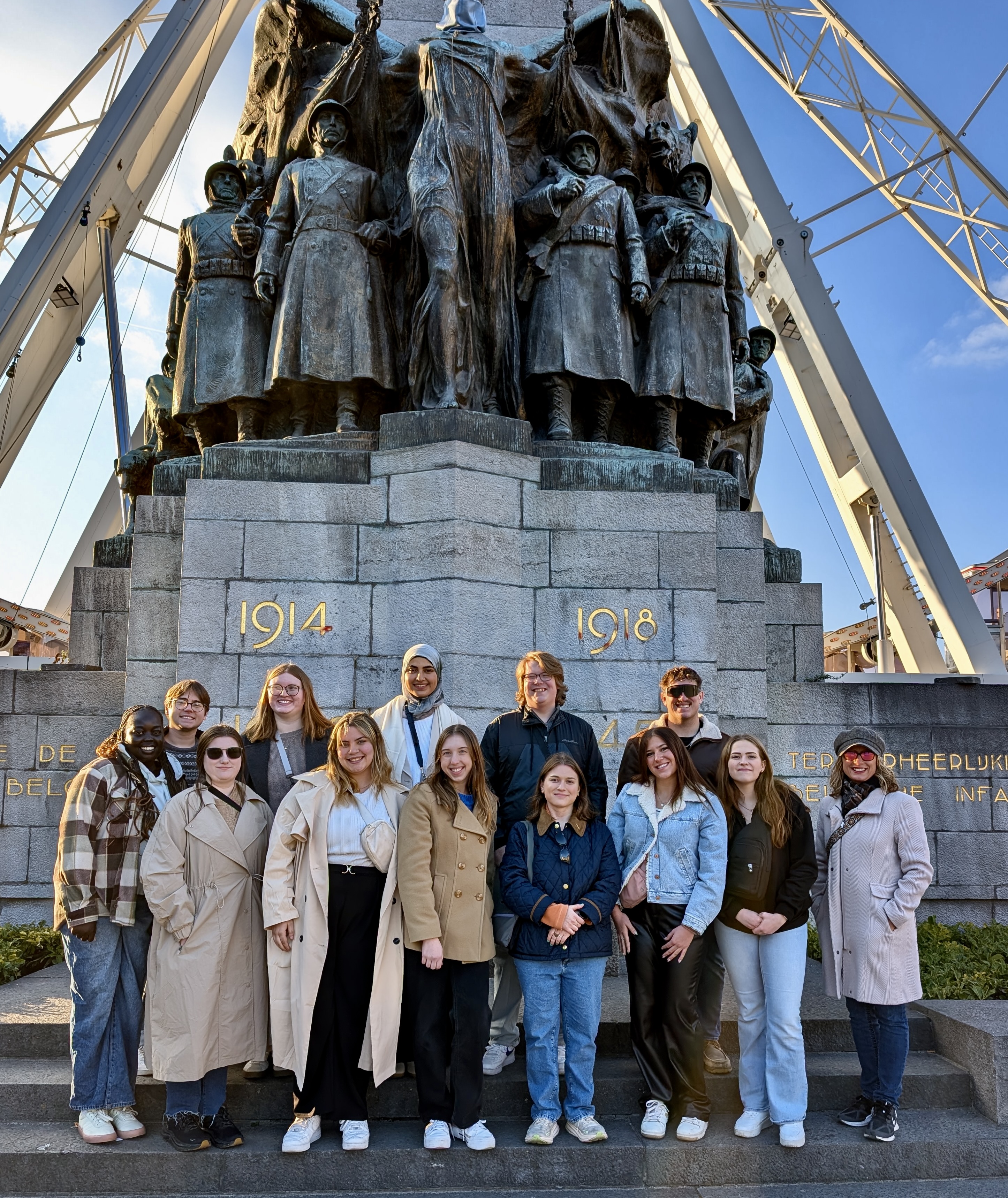
This post has not been tagged.
Permalink
| Comments (0)
|
|
|
Posted By From the ROA Army Vice President, retired Lt. Col. Louis Wilson,
Monday, June 30, 2025
|
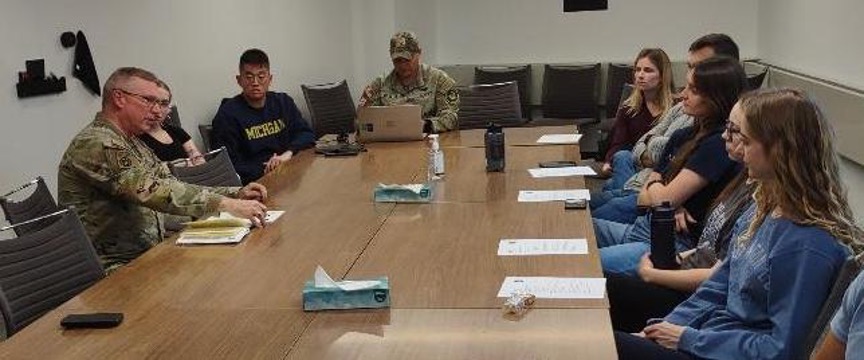
Maj. Gen. Joe Marsiglia met with cadets in Ann Arbor, Mich. to share his leadership experiences.
ANN ARBOR, Michigan -- The new Reserve Organization of America and Reserve Officer Training Corps "Working Together Program" is something special. No other program like this exists in the state of Michigan. The program was created to provide ROTC cadets with leadership skills to help them succeed as officers; and presents officers with opportunities to share their leadership experiences with a new generation of officers and to enjoy continued involvement with old and new military friends.
The idea for the program started in April 2024. Retired Lt. Col. Louis Wilson attended the University of Michigan (UM) Tri-Service Awards Ceremony and met cadets and cadre.
The UM Army ROTC Wolverine Battalion had a new professor of military science (PMS) assigned, Capt. Louis Goldstein. Informal discussions sparked an idea to bring experienced officers into contact with students. If it was to succeed, the cadets had to have input and ownership of the program. Two cadets, Jonathan Li and Ethan Wilmot, volunteered as points of contact to gather cadet input. They suggested monthly meetings at a day and time that fit the students’ class schedules. To allow time to organize, the first meeting was set to take place in January 2025.
Wilson recruited officers to participate. He was greatly helped by retired Brig. Gen. Mark Montjar, who contacted several friends, who were also generals. An initial group of six generals and six field grade officers comprised the group. Maj. Gen. U.S. Army Joseph Marsiglia and several other officers from the Army, Navy and Air Force attended in person. ROA-MI Executive Committee members and Naval officers Capt. Ventz Potochik and Cmdr. Jim Semerad took part. As several of the officers lived far from Ann Arbor, they were linked to the meetings via Zoom. The officers provided copies of their military bios. Goldstein provided the UM meeting rooms, Zoom meeting administration, and coordination with the cadets.
The program agendas were flexible and consisted of introductions and cadet questions. The cadets were asked to contact one or two officers outside of the meeting times, where the officers could serve as career mentors and information resources. The officers provided informal guidance and wrote reference letters for admission to civilian graduate and military programs. The ROTC curriculum provides a solid base of technical skills. The Working Together Program provides an additional level of leadership skills in working with people, real world experience, and military careers.
Many positive outcomes resulted for both the cadets and officers. The cadets gained leadership skills and created connections with officers to assist their careers. The officers enjoyed involvement with military friends and shared their experiences to develop future leaders. The hope is that ROA may benefit from increased involvement in ROA events with the retention and recruitment of ROA members. The program was beneficial and fun for all who participated, and may lead to long term friendships. Many of the junior and senior cadets have joined ROA as Associate Members.
With the enthusiastic cadet support, Goldstein and Wilson are planning to offer the Working Together Program at the UM ROTC Program in Sept 2025. For more information, interested officers of all service branches can contact Wilson at louis-wilson@sbcglobal.net.

Pictured above are Capt. Louis Goldstein (left) and retired Lt. Col. Louis Wilson.
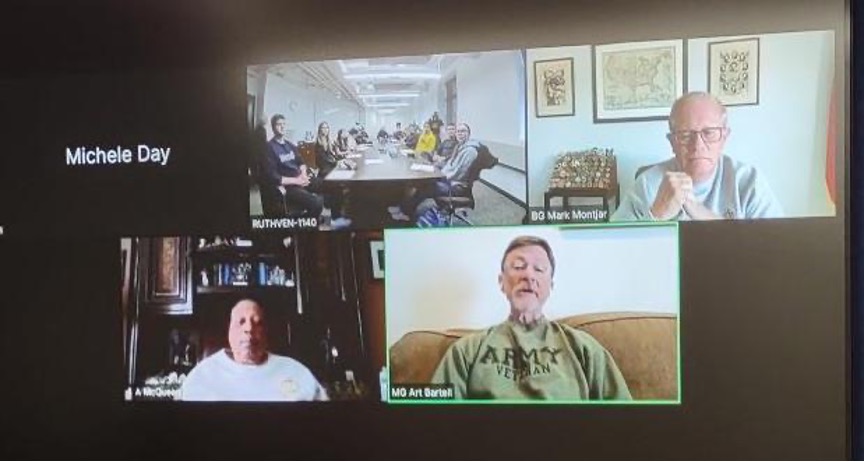
Pictured in first row from left to right: Retired Maj. Gen. Adolph McQueen, retired Maj. Gen. Arthur Bartell. Second row: cadets in conference room and retired Brig. Gen. Mark Montjar.
This post has not been tagged.
Permalink
| Comments (0)
|
|
|
Posted By TRICARE Public Affairs,
Monday, June 9, 2025
Updated: Monday, June 30, 2025
|
When you’re covered by a TRICARE health plan, you also have pharmacy coverage through the TRICARE Pharmacy Program. And as with any TRICARE plan, it’s important to know how this program works.
You should familiarize yourself with the term prior authorization to help you make the most of your pharmacy benefit. Keep in mind, prior authorization isn’t the same as pre-authorization. Pre-authorization is the process that TRICARE uses to approve medical care.
Note: If you have coverage through the US Family Health Plan, you don’t have coverage through the TRICARE Pharmacy Program. The USFHP has its own pharmacy plan.
Q: How does TRICARE determine which drugs require prior authorization?
A: The Department of Defense Pharmacy and Therapeutics Committee meets quarterly to determine which drugs:
- Are included in the TRICARE pharmacy benefit
- Identify those that require prior authorization
- Establish any additional coverage rules that may apply
Drugs that require prior authorization may include but aren’t limited to:
Prescription drugs specified by the DOD P&T Committee based on clinical appropriateness and widely accepted clinical guidelines
- Brand-name drugs that have generic equivalents
- Drugs subject to age or sex limitations
- Drugs prescribed in quantities that exceed standard limits
Q: What does prior authorization mean for me?
A: Before filling certain prescriptions, Express Scripts, the TRICARE Pharmacy Program contractor, reviews and authorizes the medication based on criteria developed by the DOD P&T Committee. Once approved, your pharmacist can fill the prescription.
Q: How do I know if my prescription needs prior authorization?
A: The TRICARE Formulary Search tool provides information about:
- Drugs that require prior authorization or have quantity limits
- Coverage and copayments
- Pharmacy forms
- Options for filling prescriptions
- Common drug interactions
To find out if your medication requires prior authorization, follow these steps:
- Use the TRICARE Formulary Search tool to locate your medication.
- When searching, make sure to include your biological sex and age.
- Download and print your drug’s prior authorization form.
- Give the form to your provider to complete and send back to Express Scripts. They can submit prior authorizations via mail, phone call, or fax.
Q: What’s an electronic prior authorization?
A: An electronic prior authorization, or ePA, is a simple, secure way for your provider to submit prior authorization requests. They can electronically submit prior authorizations for prescriptions filled:
Q: How long does the traditional prior authorization process take?
A: Prior authorization approval takes about 10 days after Express Scripts receives the request from your provider.
Q: What happens if my prior authorization is denied?
A: Express Scripts will notify both you and your provider of the denial, the appeal process, and actions that can be taken to facilitate further review and consideration. Other options include working with your provider to change to a different covered drug or paying out of pocket for your drug.
Q: With the TRICARE Pharmacy Program, where can I go to get my prescription filled?
A: According to the TRICARE Pharmacy Program Handbook, you can fill your prescriptions in several ways, including:
This post has not been tagged.
Permalink
| Comments (0)
|
|
|
Posted By Submitted by DONY,
Wednesday, May 21, 2025
|
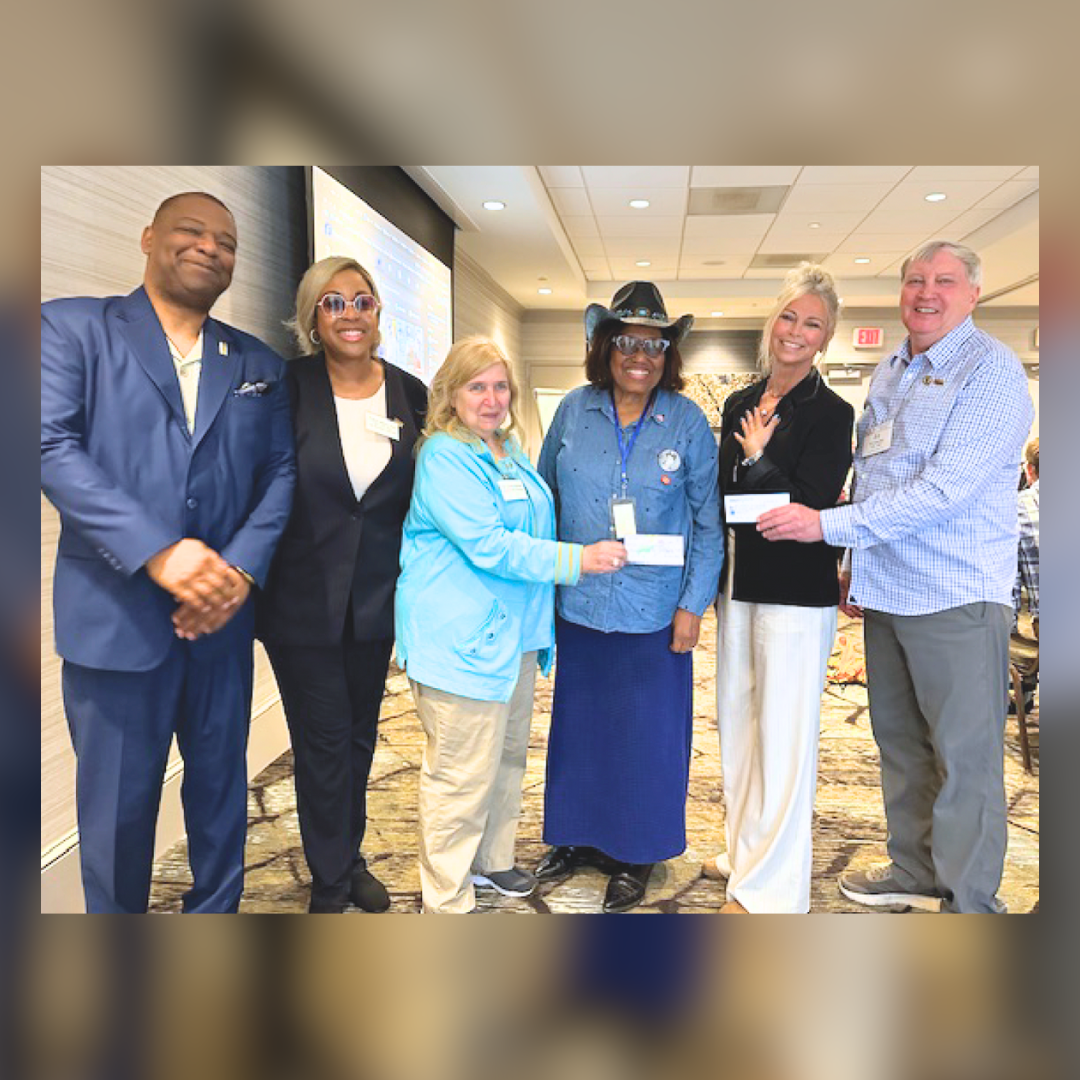
From left to right: Trey Criner, Tracee Millard, Dr. Carol Hassett and Glennie Millard of the Brooklyn, NY Chapter; Stacey Lauren Director of Operations, Veterans Miracle Center, and Ed Downey, DONY President. ROA members and DONY presented donations of more than $500 to the Veterans Miracle Center. 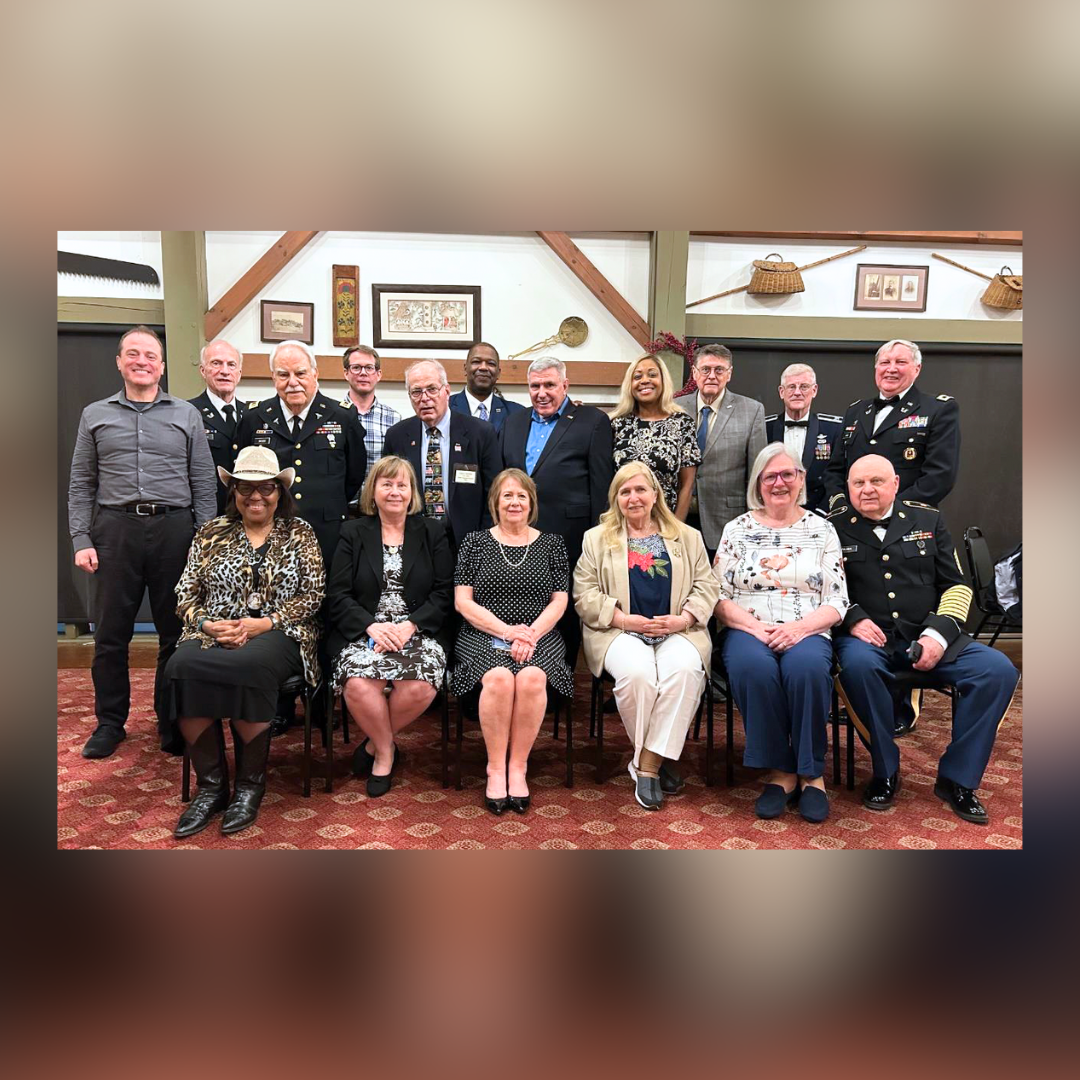
Front row L to R: Retired Army Lt. Col. Glennie Millard; President Brooklyn/NYC Chapter; Nancy Langlie; Jane Downey; Dr. Carol Hassett, Brooklyn/NYC Treasurer; Delores Palmer, Southwestern NY Chapter Secretary and retired Army Master Sgt. Roger Palmer, Treasurer Southwestern NY Chapter. Back rows L to R: USAFR Maj. Vince Leone, Secretary/ROTC coordinator Genesee Valley Chapter; retired Army Col. Konrad Langlie, Capital District Chapter; retired Maj. Harvey Snyder, Capital District Chapter VP and Membership; Army Sgt. Ryan Downey (event IT coordinator), retired Army Lt. Col. Carmen Gentile, Buffalo Chapter and DONY National Council Representative, Trey Criner ROA National Director of Operations; retired Army Col. John Hassett, Brooklyn/NYC Treasurer; retired Army Maj. Tracee Millard, Brooklyn/NYC Chapter; retired Army Capt. Laurie Clarke, DONY and Capital District Chapter Secretary; USAF Col. Robin Pfeil, DONY Treasurer; retired Army Col. Ed Downey, DONY and Capital District President.
This post has not been tagged.
Permalink
| Comments (0)
|
|
|
Posted By Kalen M. Cotto, former Army Reserve Captain, ROA Communications,
Saturday, May 17, 2025
|
Each May, Americans pause to honor those who serve in uniform on Armed Forces Day; a national tribute not only to the brave men and women on active duty, but also to the often unsung heroes of our Reserve and National Guard components. While the day is widely recognized as a celebration of military strength and unity, its origins and deeper meaning reveal a profound connection to the legacy of citizen-soldiers and the enduring role of America’s military reserve.
Armed Forces Day was established in 1949 by Secretary of Defense Louis Johnson, following the unification of the U.S. military branches under the newly formed Department of Defense. Before this, each service branch held its own commemorative day. Johnson envisioned a single celebration that would highlight the unity and teamwork of the modern American military.
The first Armed Forces Day was observed on May 20, 1950, under the theme "Teamed for Defense." This was not just a slogan—it reflected a new military reality in which all branches and all components, including the Reserve and National Guard, were expected to work in integrated harmony to defend the nation.
The Legacy of the Citizen-Soldier
The idea of a part-time citizen-soldier is deeply rooted in American history. From the colonial militias that predated the Revolutionary War to the modern-day National Guard and Reserve, these men and women have always been vital to U.S. defense efforts.
Throughout major conflicts—World War I, World War II, Korea, Vietnam, Desert Storm, Iraq, and Afghanistan—Reserve and Guard forces have been mobilized to serve alongside their active-duty counterparts. In fact, today’s military could not function without them.
In 1973, the U.S. adopted the Total Force Policy, formally integrating Reserve and National Guard units into strategic military planning. This policy reinforced what had long been true in practice: the reserve components are not a backup—they are an indispensable part of the operational force.
Though commonly viewed as a day for active-duty service members, Armed Forces Day was always intended to honor the full spectrum of military service, including:
- Active-Duty Personnel
- Reserve Forces
- National Guard Units
By recognizing everyone under the Department of Defense, Armed Forces Day promotes awareness of the teamwork and integration that define today’s military.
It also highlights the unique contribution of reservists—individuals who balance civilian careers with military obligations, often stepping away from families and jobs at a moment’s notice to respond to national emergencies or overseas deployments.
In our modern era, Armed Forces Day is more than just parades and ceremonies. It's a chance for military units—active, reserve, and guard—to engage with the public, demonstrate their capabilities, and remind the nation of the human beings behind the uniform.
For Reserve organizations, the day offers a powerful platform to educate communities about the crucial, and sometimes invisible, role that reservists play. These are our neighbors, coworkers, and community leaders—serving in silence until duty calls.
This post has not been tagged.
Permalink
| Comments (0)
|
|
|
Posted By Multiple Contributors,
Thursday, May 8, 2025
|
Thousands of American lives were saved during the war in Iraq and Afghanistan due to improvements in military battlefield care based on research by military physicians and nurses that is now threatened by budget cuts. Projections of zero funding for a proven Department of Defense research program in Fiscal Year 2026 and the outyears will be catastrophic not only to military nursing, but also to civilian nursing and the care that nurses provide to all Americans. Our warfighters have gone into battle since 9/11, confident that, if wounded or injured, their survivability was the highest in history, with a survivability rate greater than 90 percent. They knew they would receive the best in medical and nursing care from the battlefield to home. That survivability rate was achieved by the science that undergirds evidenced-based care. Since 1992, the TriService Nursing Research Program (TSRNP) has funded research conducted by military nurse scientists to improve the care provided to our warfighters. This program was created by the late Senator Daniel K. Inouye, who credited his life to the nurses who cared for him following his wounds suffered in WWII. This program is housed at the Uniformed Services University of the Health Sciences (USUHS), in Bethesda, Md. The science that has come from TSRNP has led to improvements in resuscitation following severe injury and bleeding, musculoskeletal studies that have improved servicemember readiness, PTSD treatments using alternative therapies, and care for families during and after deployment. Military families have also benefited from the funding provided to military nurse scientists from this program. Financial support for TSNRP began as an earmark, followed by contributions from the services, and finally as Operations and Management monies through USUHS. The amounts have been essentially flat for 30 years, with occasional dollars directed by Congress to be added to the “pass-through” funds from the USUHS budget. Despite flat budgets, military nurses have conducted over 500 studies. Not funding TSNRP now and in the outyears will have serious second-, third-, and fourth-order effects. The morale of military and civilian nurses in military hospitals will fall as they realize they cannot provide the best in evidence-based care. They will fear harming those entrusted to them. Servicemembers could be harmed, further reducing their readiness. Military leaders, aware that care delivered on the battlefield is outdated, will question whether their servicemembers will be able to deliver the lethality they have in the past. Family members will worry more about deployments and what might happen if their loved one cannot get the best science-based care. Wounded and injured servicemembers will worry about survival or if they will have the latest in equipment, such as prostheses. Evidence garnered through military nursing research defines care for our service members and eventually these best practices find their way into civilian nursing as well. To stop research that directly improves the lives of those who volunteer to serve in our armed forces will mean that care no longer based on research could result in outdated practices and harm. It could also erode recruiting and retention. Who would want to serve if they are not confident of the best in medical and nursing care, especially in war? We urge Congress to direct funding to TSNRP with a budget line item of $13M. This funding will allow TSNRP to continue to advance the science and research needed to produce new, cutting-edge evidence-based nursing practices that will directly lead to improving the care provided to our warfighters on the battlefield. This funding will continue to improve the health and wellbeing of our deserving military servicemembers and their families, a community of volunteers who continue to provide selfless service to our nation day in and day out. After all, they are the 1 percent who volunteer to wear the uniforms of our nation. Don’t they deserve the best nursing care America can provide? Article contributors include: Margaret C. Wilmoth, PhD, MSS, RN, FAAN, a retired U.S. Army major general, professor of nursing and president-elect, ROA. Patricia A. Patrician, PhD, RN, FAAN, a retired U.S. Army colonel, recipient of TriService Nursing Research funds and retired professor of nursing. Deborah Kenny, PhD, RN, FAAN, a retired U.S. Army lieutenant colonel, is a past director of the TriService Nursing Research Program (TSNRP) and a professor of nursing. Jeffrey E. Phillips, a retired U.S. Army major general, is the executive director of the Reserve Organization of America.
This post has not been tagged.
Permalink
| Comments (0)
|
|
|
Posted By Retired Col. Don Brown, USAF,
Wednesday, April 23, 2025
|
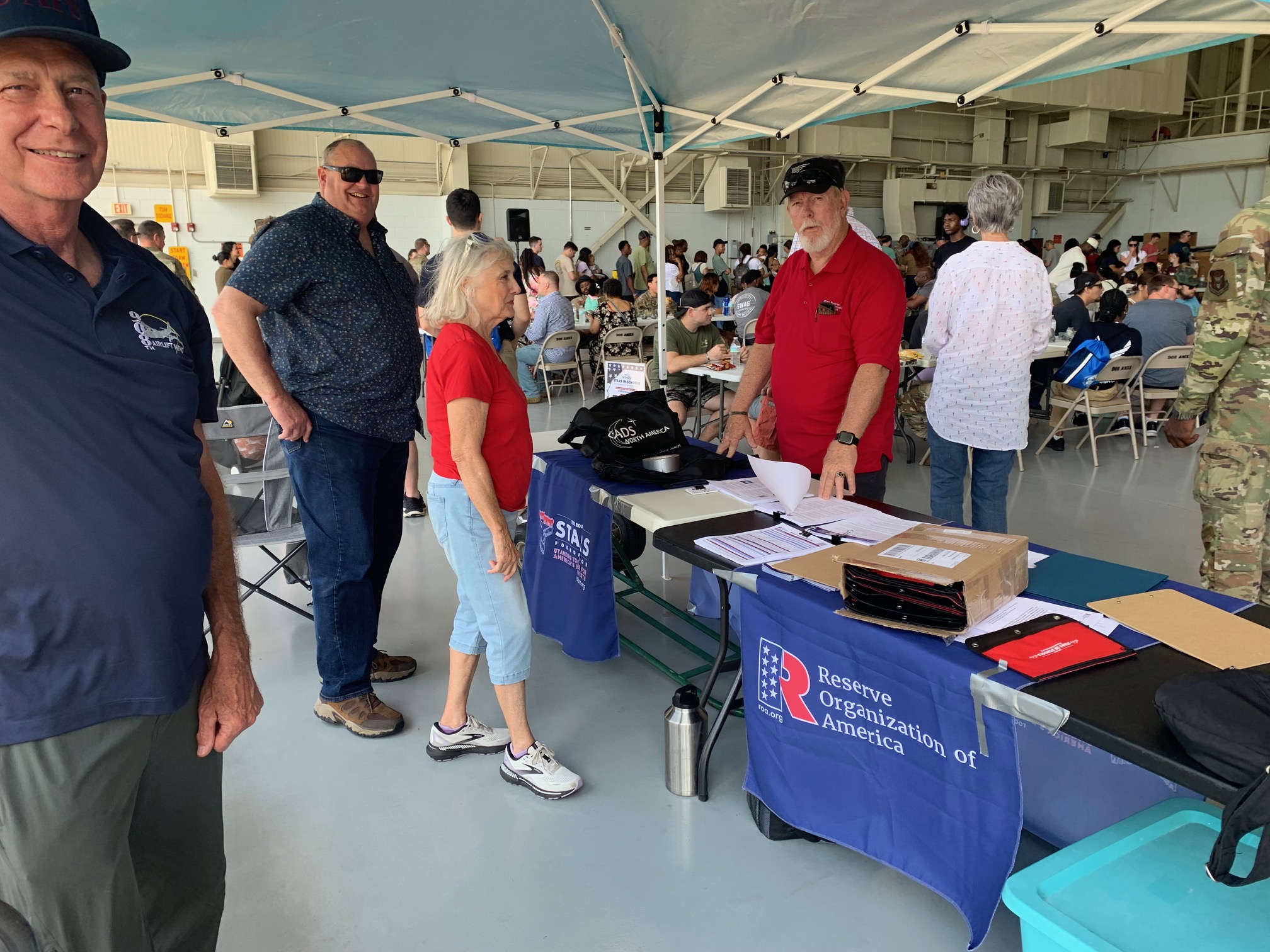
ROA Department of the Southeast's Alabama Chapter leadership group participated in Family Day at the 908th Flying Training Wing on April 5. This was a first in many years. ROA information on legislative and policy successes as well as membership information was shared with many. Also, ROA School Kits were distributed to 40 families of members being deployed. The ROA members there included retired Chief Master Sgt. Owen Duke, retired Chief Master Sgt. Geogh Percival, retired Lt. Col. Paul Baird, retired Col. Bill Forshey, and retired Col. Don Brown – all former Air Force members of the Wing (pictured below). The next planned outreach will be an opportunity to speak at a Commander’s Call about the gains and successes for serving veteran airmen by ROA. 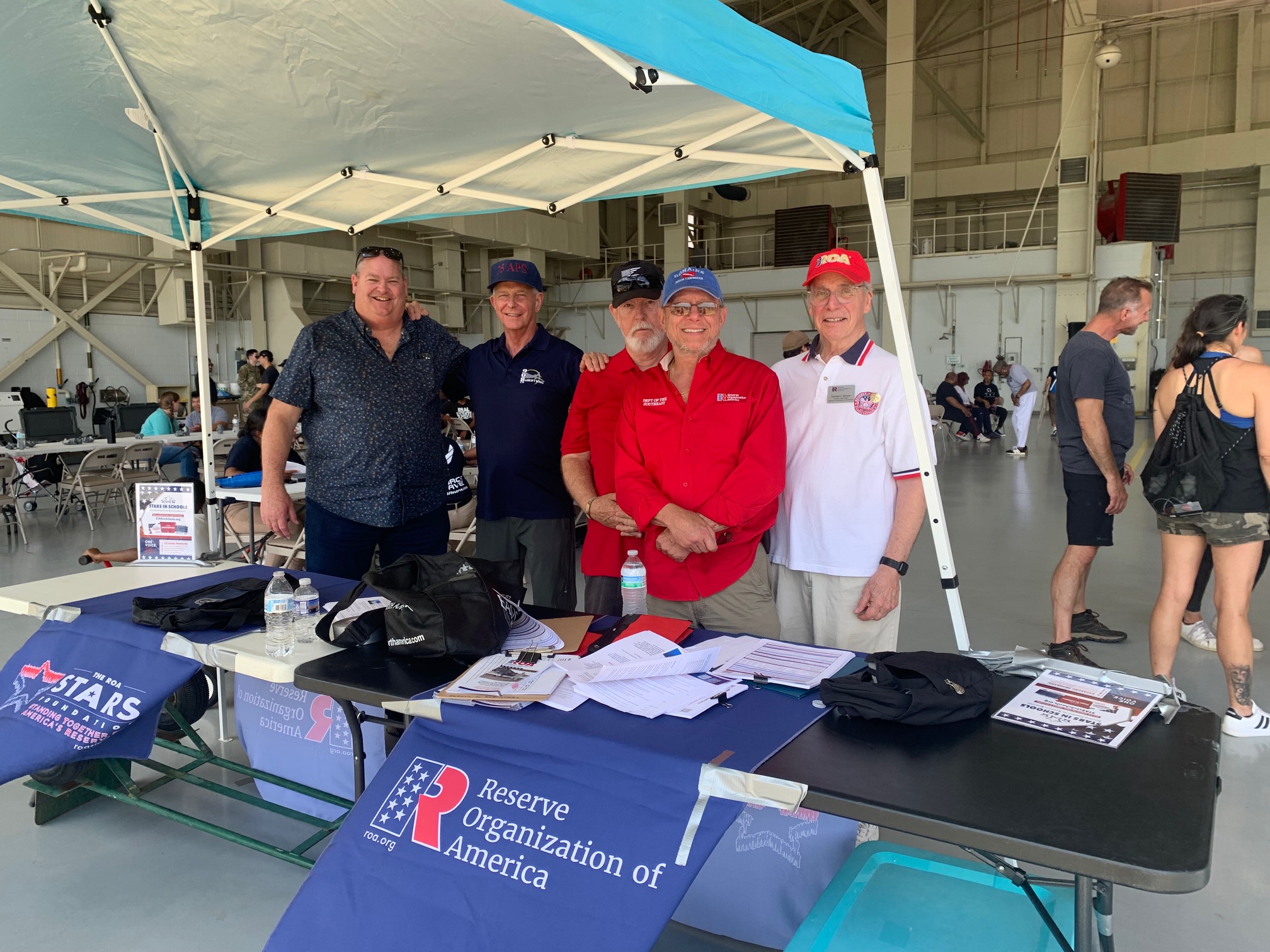
This post has not been tagged.
Permalink
| Comments (0)
|
|
|
Posted By Retired Col. Scott Russell, USAFR,
Thursday, March 27, 2025
|
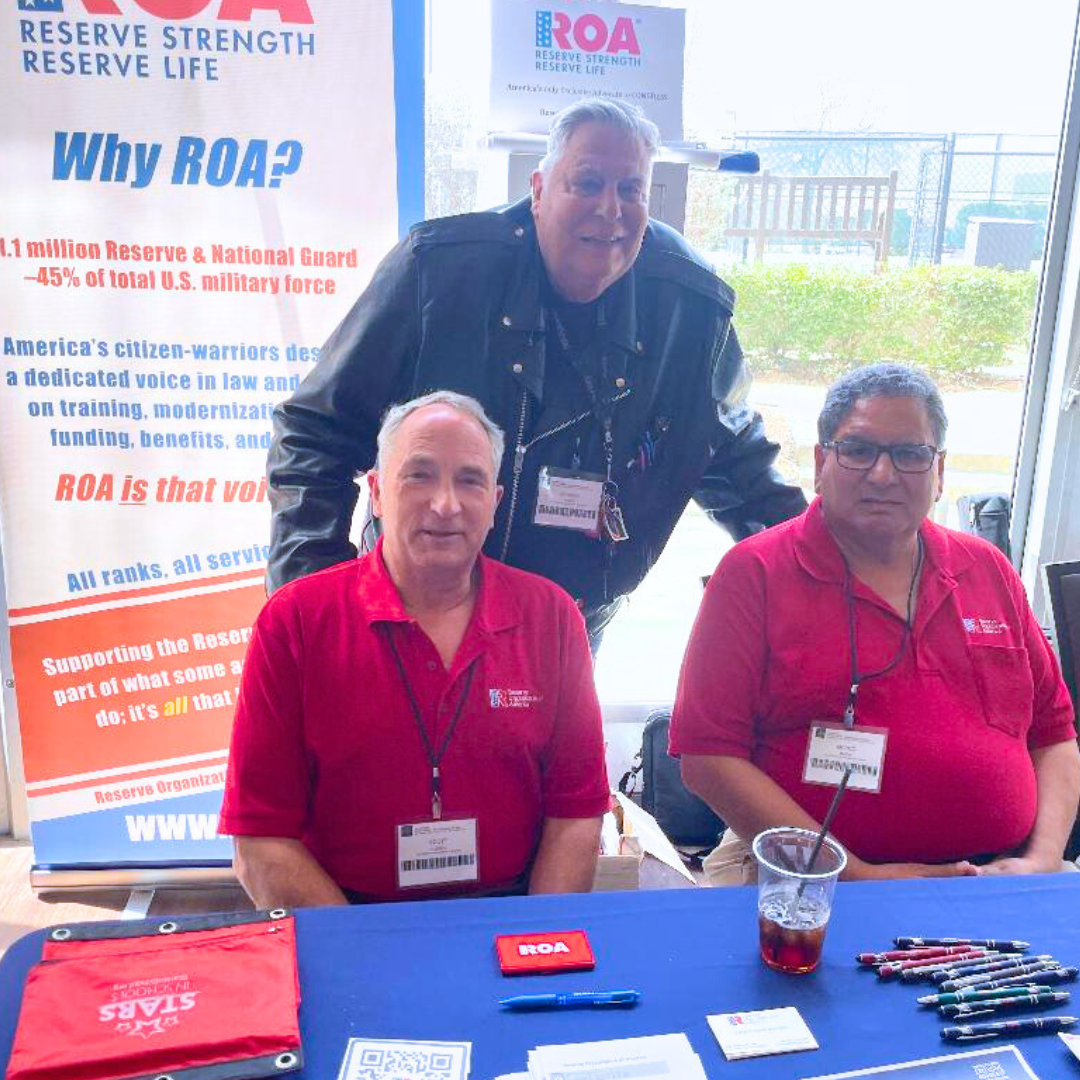
Members of the Department of Texas participated in a USAR Yellow Ribbon event in San Antonio, Texas. The event was hosted by the 63rd Readiness Division and had 273 deployers and family members. ROA members gave out 22 STARs in School kits as well as handouts on ROA's legislative priorities and info on the Service Members Law Center. Pictured above are Scott Russell (left), Marc Marin (right), and George Rippel (center).
This post has not been tagged.
Permalink
| Comments (0)
|
|
|
Posted By Dept. of Veterans Affairs,
Thursday, March 27, 2025
|
As part of our commitment to provide world-class care and benefits to those who have served our nation, VA is pleased to present the “2025 VA Federal Benefits Guide for Veterans, Dependents, Survivors, and Caregivers.”
Have you applied for VA care, benefits and services? Unsure what else you may be eligible for? Don’t miss out on what you’ve earned—check out this handy reference guide to learn more.
The handbook contains a comprehensive listing of VA programs, including phone numbers and websites for easy reference. The annual Federal Benefits Guide hosts a wealth of information on most VA benefits and services, including:
- Compensation.
- Life insurance.
- Pension and fiduciary services.
- Education benefits.
- Economic development and employment.
- Home loan guaranty programs and housing assistance.
- Mental health resources.
The handbook will help Veterans, service members and their families understand the full scope of VA resources available to them to help them make the most of life after service. It provides details on eligibility requirements for each benefit, and because VA serves different generations of Veterans, it also outlines the qualification guidelines for distinct periods of service to clarify eligibility for Veterans with service spanning both peace and wartime periods.
The VA Federal Benefits Guide is available in both print and digital formats. Veterans and family members can access the booklet on VA’s website, providing instant and convenient access to the wealth of information it contains. A limited number of printed copies may be available at your local medical center, Vet Center or regional office. To find the nearest VA facility, go to www.va.gov/find-locations.
The information in this guide is validated by VA as of Oct. 10, 2024. For the most up-to-date information, Veterans and family members should visit www.va.gov, or go to the specific links provided in this publication to access information on the program that they’re interested in, as regulations, payments and eligibility requirements are subject to change. You can also call VA at 800-827-1000 from 8 a.m. to 9 p.m. ET, Monday through Friday to speak with a representative.
This post has not been tagged.
Permalink
| Comments (0)
|
|
 Blog Home
 All Blogs

 RSS
RSS